Why Is My Washing Machine Making a Loud Noise? A Barrie Homeowner’s Guide
Last updated: August 11, 2026
In this article
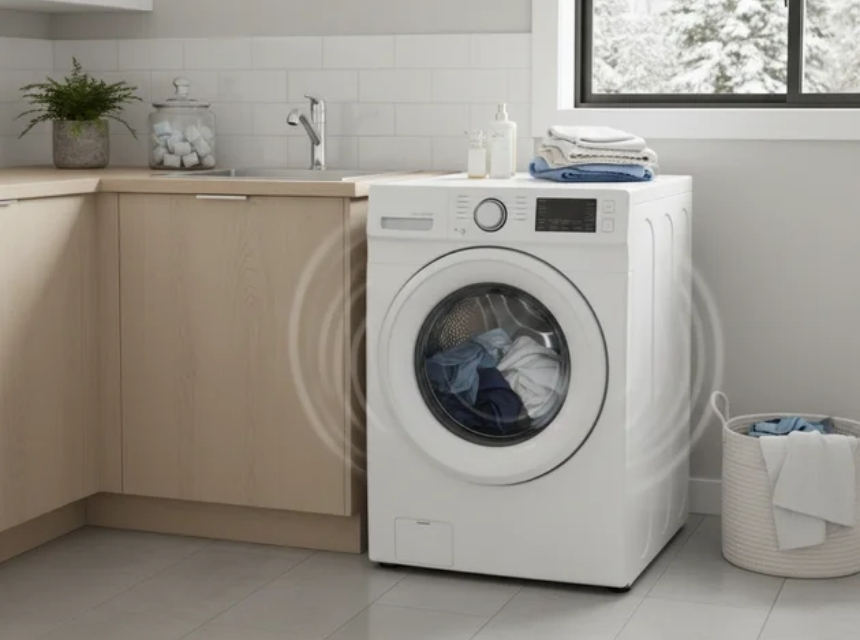
The sound starts during the spin cycle. It could be a thump, a grinding, a metal-on-metal scrape, or a vibration that rattles everything on the shelf above the machine. The noise is the machine’s way of telling you something specific. The trick is knowing how to listen. Don’t want to deal with the issue or think the sound is too loud, call for a washing machine repair today!
The sound that wakes you up at 2am
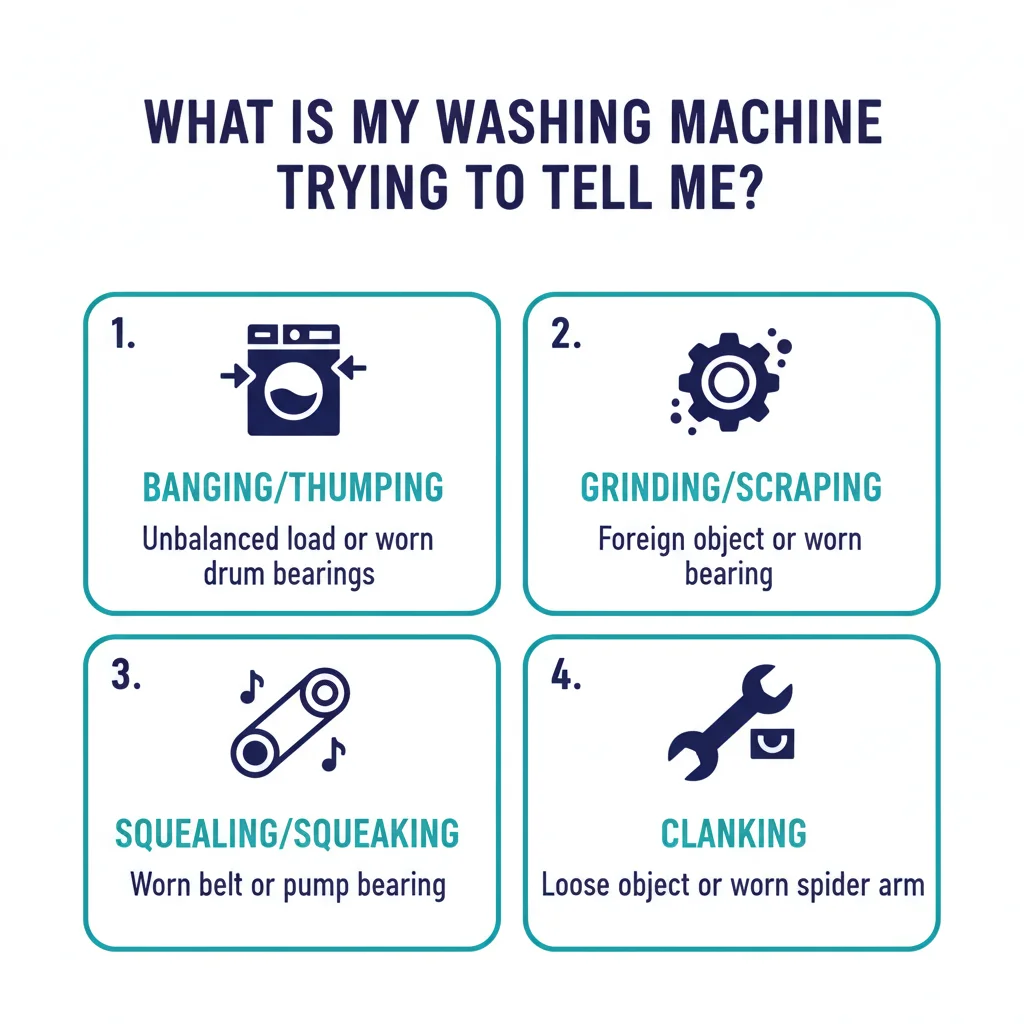
Most washing machine noises that people call us about fall into four categories: banging or thumping during spin, grinding or scraping at any point in the cycle, squealing or squeaking as the drum speeds up, and a vibrating rattle that moves the whole machine across the floor. Each one points to a different part of the machine.
The good news: not all of them require a technician. Some of the loudest noises in washing machines have a 30-second fix. Some mean the machine needs a repair. And a few mean you have been pushing the machine past its limits for longer than you should have.
What type of noise is it?
Banging and thumping sounds
This is the most common call we get about washing machines in Barrie, and most of the time the fix takes less than two minutes.
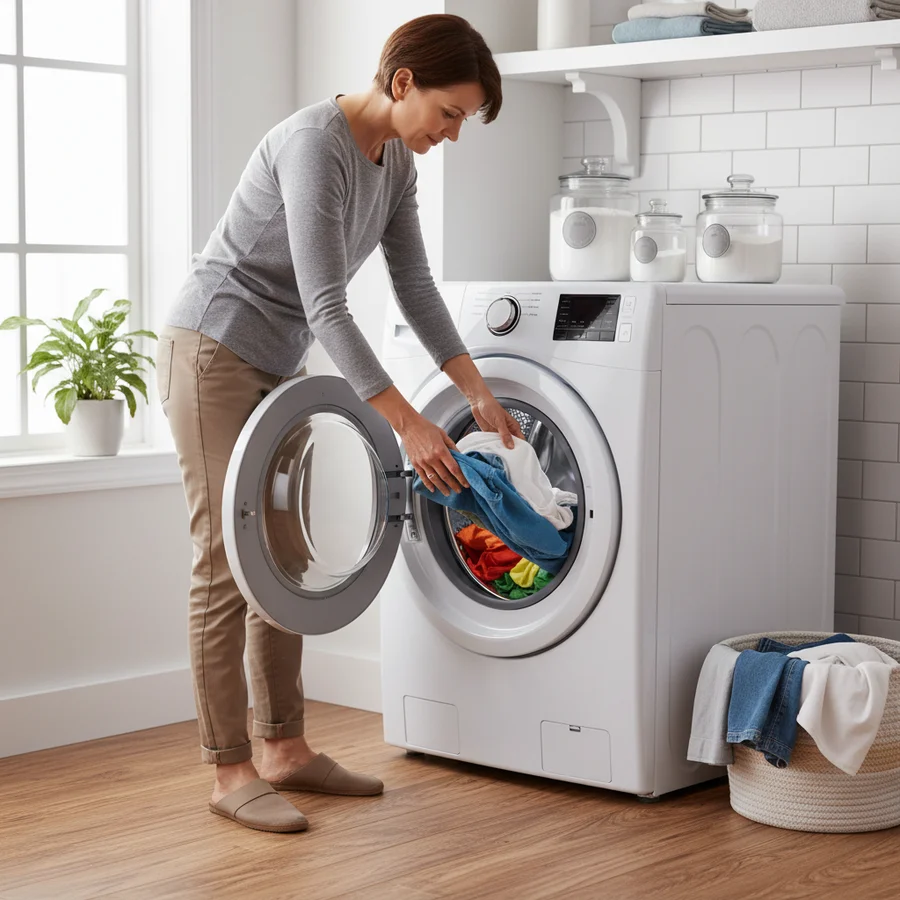
When laundry bunches to one side of the drum, the machine becomes unbalanced during the spin cycle. At low spin speeds, it thumps rhythmically against the cabinet. At high speed, it can bang loudly enough to sound like something has broken. Stop the cycle. Pull the laundry out. Redistribute it in loose handfuls around the drum. Restart. In most cases, that is all it takes.
Heavy items like jeans, towels, and bedding are the usual culprits. A single king-size duvet washed alone will almost always trigger this. Wash heavy items with similar-weight items, or break large loads into two smaller ones.
If the banging continues on an empty cycle, the problem is mechanical. On front-loaders, that points to worn shock absorbers: the dampening struts that hold the drum and cushion movement during spin. On top-loaders, it is usually worn suspension springs or dampening pads. Both are repairable.
Grinding and scraping sounds
A grinding sound deserves more attention than a thump. The two most common causes are a trapped foreign object or a worn drum bearing.
Foreign objects get into the drum space through pockets. Coins are the classic example, but underwire from bras, small toys, and even pens make it in regularly. Check around the rubber door gasket on front-loaders and the drum rim on top-loaders. If you can see or feel something hard, try to remove it carefully before running another cycle.
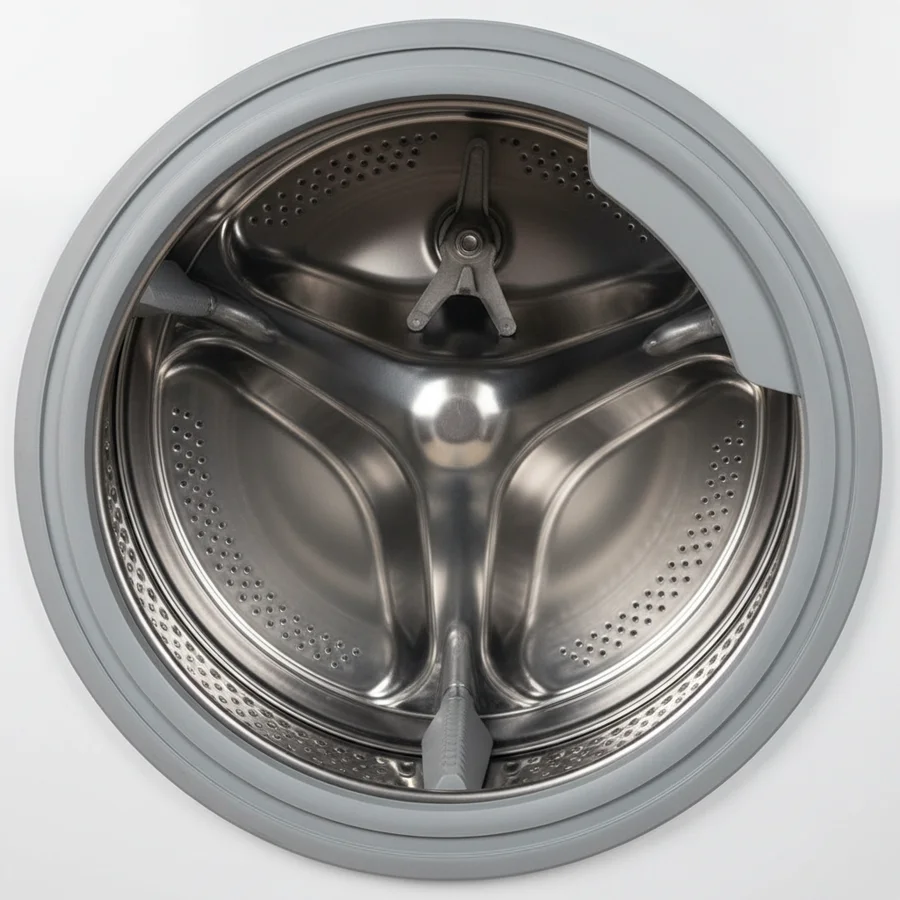
If the grinding gets louder over weeks and months, the drum bearing is failing. The bearing sits behind the drum and supports its rotation. When it wears out, the drum starts to wobble slightly. You will hear a grinding or rumbling sound that increases as the spin speed climbs. Left alone, a failing bearing will eventually damage the drum spider arm (the three-armed bracket that holds the drum) and the outer tub. That turns a $200 to $300 bearing repair into a $500 to $700 job, or a replacement decision.
Squealing and squeaking sounds
Squealing that starts when the spin cycle begins is usually a worn drive belt. The belt connects the motor to the drum on direct-drive belt machines. As it wears, it loses grip at high loads and starts to slip and squeal. On some brands, replacing the belt is a manageable DIY job. On others, it requires partial disassembly.
A metallic squeal, especially one that has a consistent pitch and does not vary with spin speed the way a slipping belt does, is more likely a pump bearing or a worn pulley bearing. This one should be diagnosed before you continue using the machine.
Vibrating and walking sounds
A washing machine that vibrates excessively and slowly migrates across the floor is almost always a level problem. Check the machine with a spirit level and adjust the feet. Most washing machines have adjustable front feet and self-adjusting rear feet on top-loaders. Getting all four corners stable is the fix.
If the machine is already level and still vibrating badly, check the floor underneath it. Laundry rooms in some Barrie homes, especially older houses and finished basements with subfloor panels, have flex in the floor that amplifies vibration. An anti-vibration mat can help significantly without any repairs needed.
How to diagnose the noise yourself
Before calling a technician, work through this sequence:
- Stop the machine mid-cycle and remove all laundry
- Redistribute the load evenly and restart. Does the noise stop? Unbalanced load.
- Run an empty cycle. Does the noise continue? Mechanical issue.
- Check the drum interior by hand for trapped hard objects around the gasket and rim
- Push the drum lightly side to side with the door open. Noticeable wobble or grinding? Bearing.
- Check the machine is level. Adjust feet as needed.
- Note when in the cycle the noise occurs. During agitation, during spin, during fill?
When to call a technician
Call a technician if the noise does not stop after redistributing the load and checking for trapped objects. Worn drum bearings and failing shock absorbers will not get better on their own. The longer you run the machine in that state, the higher the eventual repair cost.
Also call if you hear anything that sounds like metal-on-metal contact, if the drum wobbles when pushed, or if water is leaking alongside the noise. Leaks combined with noise often mean the drum seal and bearing are failing together.
Max Appliance Repair covers Barrie, Innisfil, Orillia, Wasaga Beach, and surrounding areas. Same-day appointments are available most days. Book your washer repair or call (705) 481-1565.
Common questions from Barrie homeowners
Why does my washing machine make a banging noise only during spin cycle?
Banging during the spin cycle is most often an unbalanced load. The drum accelerates and if the laundry has bunched to one side, the machine starts to thump. Stop the cycle, redistribute the clothes evenly, and restart. If it continues on an empty cycle, the issue is mechanical, likely worn shock absorbers on a front-loader or worn suspension springs on a top-loader.
Is a grinding noise in a washing machine serious?
It can be. A grinding noise that gets louder over time usually points to a worn drum bearing. Bearings support the inner drum and when they fail, the grinding gets progressively worse. Running a machine with a worn bearing can eventually damage the drum spider arm and outer tub, turning a $200 repair into a $600 one. Get it looked at sooner rather than later.
My Whirlpool washer in Barrie is making a squealing noise. What is wrong?
Squealing at the start of or during the spin cycle on Whirlpool top-loaders is often the drive belt slipping or wearing out. It can also be a pump bearing on front-loaders. The belt replacement is usually straightforward and reasonably priced. If the squeal has a metallic quality and gets louder, it is more likely a bearing.
Can I fix a loud washing machine myself?
Some issues, yes. Redistributing an unbalanced load, removing a trapped object from the drum, and checking that the machine is level are all things you can do without tools. Replacing a drive belt is possible for mechanically confident homeowners. Drum bearing replacements require disassembling most of the machine and are best left to a technician.
How much does washer repair cost in Barrie?
A diagnostic service call in Barrie typically runs $80 to $120. The repair cost depends on the part: replacing shock absorbers runs $150 to $280, drive belts $120 to $200, and drum bearings $280 to $450 depending on the model. Max Appliance Repair charges a flat diagnostic fee and gives you a written quote before any work begins.
Free Download
Download our Washing Machine Noise Diagnosis Quick Guide: a one-page checklist to identify the noise type and next steps.
Download PDFA noisy washer does not always mean a big repair bill. Start with the simple checks. If they do not solve it, book a diagnostic call before the problem has time to get worse. Most washing machine noise issues in Barrie are diagnosed and quoted on the first visit.
Note: Repair costs mentioned in this article are general industry averages based on common appliance repair scenarios in Barrie and may vary depending on the appliance brand, model, part availability, and the complexity of the repair. For an accurate quote, please contact us directly for a professional diagnosis and upfront estimate.