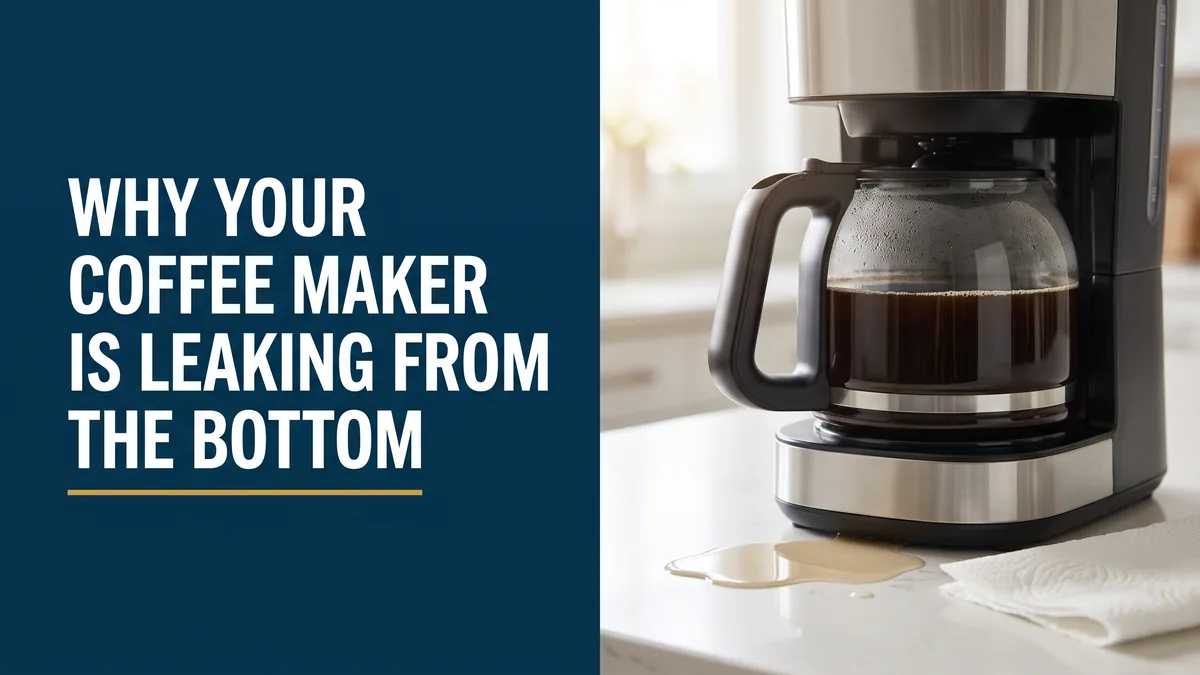
Why Your Coffee Maker Is Leaking from the Bottom
Short version first: a coffee maker leaking from bottom seams and seals almost always traces to a worn gasket, a cracked reservoir, a scaled-up valve, or a loose internal hose, and most of those cost far less to fix than replacing the whole machine. If you have a coffee maker leaking and leaving a morning puddle on your counter, our coffee machine repair team in Barrie sees this every week and can usually pin down the cause fast.
Below we cover why water escapes from underneath, which causes you can safely check at your kitchen table, and when a small drip means the machine needs a pro before it damages your counter or trips a breaker.
Why your coffee maker is leaking from the bottom
A coffee maker leaking underneath is a water-management system issue. Cold water sits in a reservoir, gets pushed through a pump or a heating tube, turns to near-boiling water, and drips over the grounds. Every one of those steps relies on a seal, a hose clamp, or a one-way valve. When any of them loosens, cracks, or clogs, water takes the path of least resistance, which is usually straight down to your counter.
That is why the leak shows up at the base even though the actual fault might be halfway up the machine. Water runs downhill inside the housing before it finds a gap to escape. So the puddle underneath tells you there is a leak, but not exactly where. The list of likely culprits is short, and a few of them you can rule out in five minutes.
Quick take
A leak from the bottom is a symptom, not a diagnosis. Start by drying everything, running one brew cycle, and watching where the first drip appears. Front, back, or a specific corner tells a technician a lot.
The common causes, from simple to serious
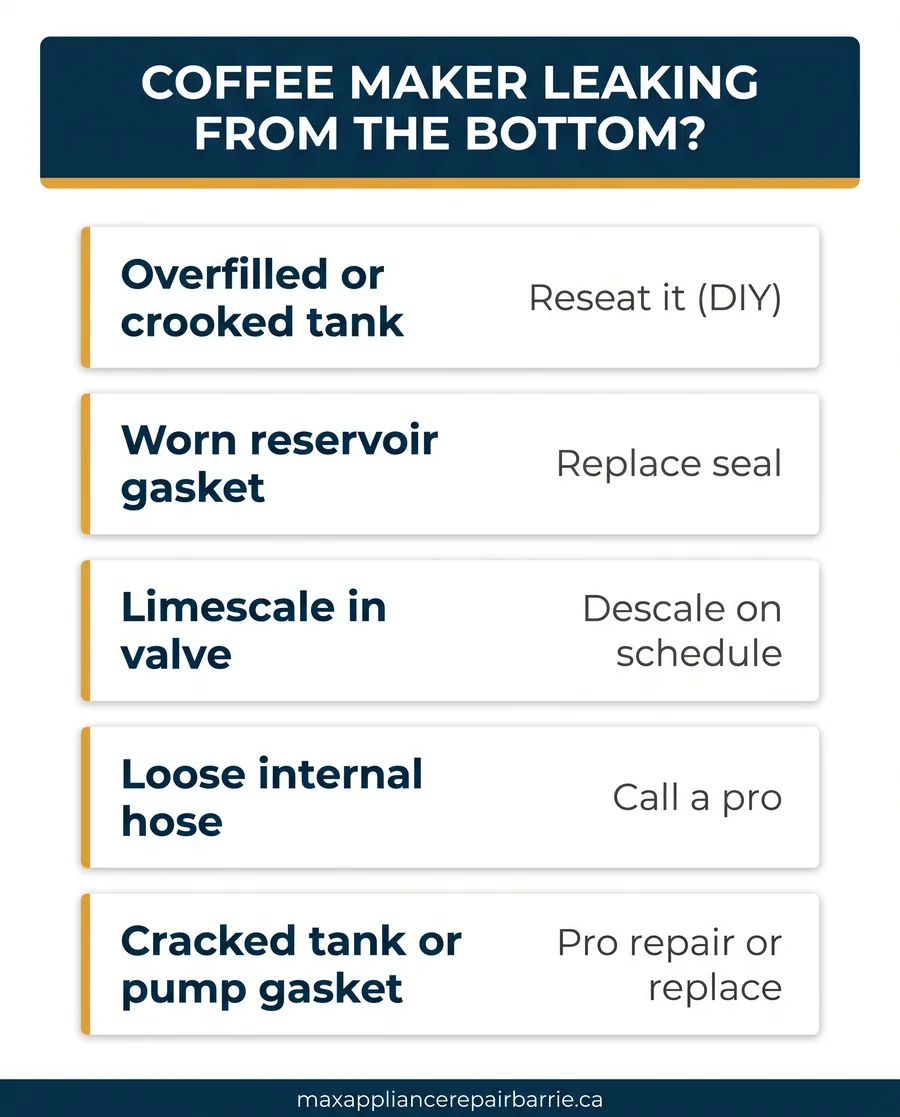
Here is what usually causes water to pool under a drip machine, single-serve pod brewer, or espresso unit, roughly in order of how easy each one is to deal with:
- Overfilled or misseated reservoir. Fill past the max line or drop the tank back in crooked, and it weeps from the base.
- Worn reservoir gasket or valve. The rubber seal where the tank meets the machine hardens with age, letting water bypass it.
- Limescale in the internal valve or tubing. Mineral buildup props a one-way valve open or blocks a line, forcing water out.
- Loose or split internal hose. Years of vibration can back a hose clamp off its fitting.
- Cracked water tank or brew chamber. A hairline crack leaks slowly and only when full.
- Failing pump or heater gasket. The most involved issue, and usually a job for a technician who can open the housing safely.
Did you know?
Many single-serve machines leak from the bottom simply because the exit needle or the pod holder is clogged with old grounds. Backpressure builds, and water pushes out of the overflow instead of through the pod. A deep clean of the needle and holder clears a surprising number of these leaks.
Hard water and limescale: the Barrie factor
Barrie and much of Simcoe County run on moderately hard water. Every time your machine heats that water, dissolved minerals stay behind as scale. Over months, it coats the heating element, narrows the tubing, and crusts up the small internal valves designed to seal between brews. Scale is one of the most common reasons a machine that never leaked suddenly starts weeping from the base.
If you want the plain-science version of why hard water leaves residue, the U.S. Geological Survey explainer on water hardness covers it well. The takeaway for a coffee maker leaking due to scale is simple: descale on a schedule, and you head off both leaks and weak, slow brewing before they start.
Pro tip for Barrie kitchens
Descale every four to six weeks with a proper descaling solution or a 1:1 white vinegar and water run, followed by two clean-water cycles. If you use filtered or softened water, you can stretch that interval. Consistent descaling is the single best thing you can do to prevent leaks caused by hard water.
What you can safely check yourself
- Unplug the machine and let it cool. Never poke around a hot or powered brewer.
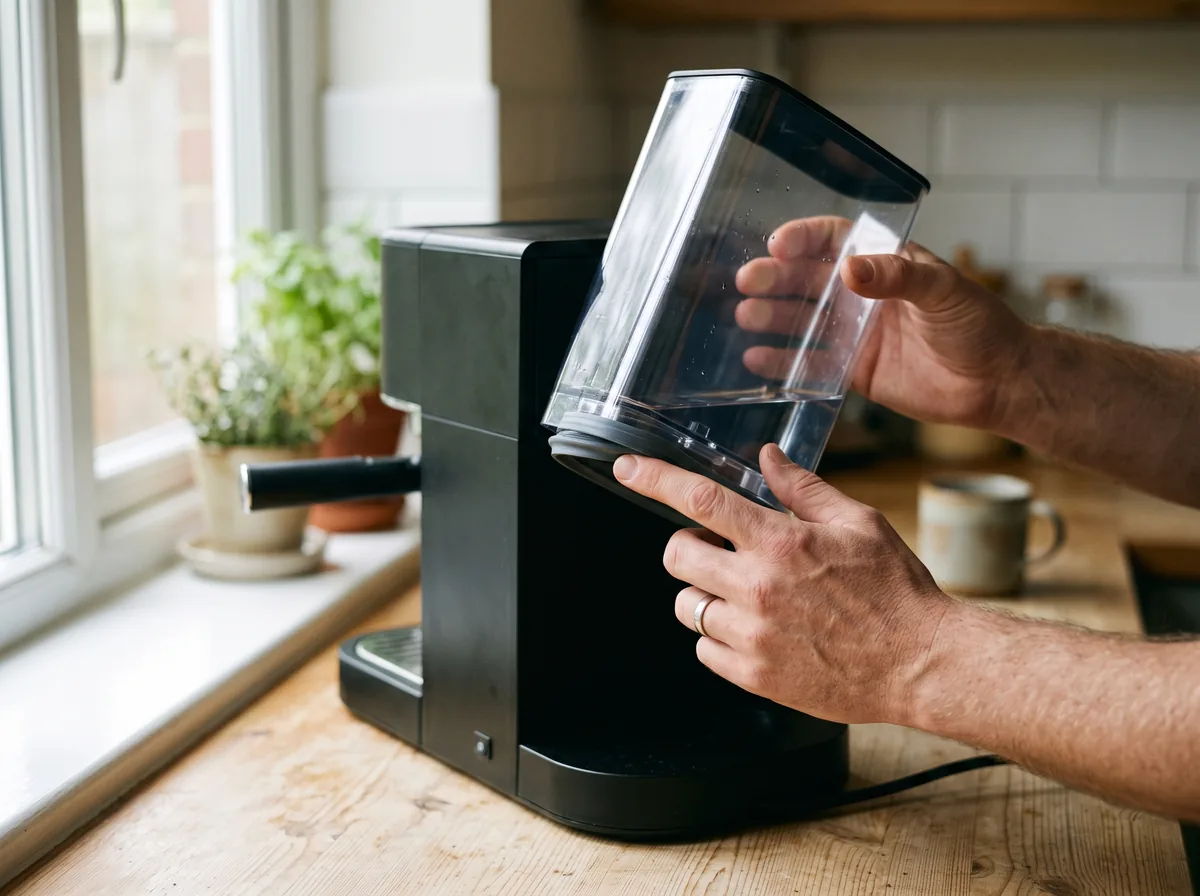
- Empty and reseat the reservoir. Confirm you are not filling past the max line and that the tank clicks in square and flush.
- Inspect the tank and its gasket. Look for a hairline crack, a warped lid, or a hardened, cracked seal where the tank meets the body.
- Run one water-only cycle over a dry towel. Watch which edge the first drip appears at, which narrows down the cause.
- Descale the machine. Run a descaling solution through, then two clean-water cycles, and test again. Scale is a frequent hidden culprit.
- Check the drip tray and overflow. Empty a full tray, clear any grounds from a pod holder or exit needle, and retest.
Stop and unplug it if:
Water is reaching the plug or cord, the machine trips a breaker or GFCI, you see scorching or smell burning plastic, or the leak only happens once the water is hot. Those point to an internal or electrical fault that is not a safe DIY job. Unplug it and book a technician.
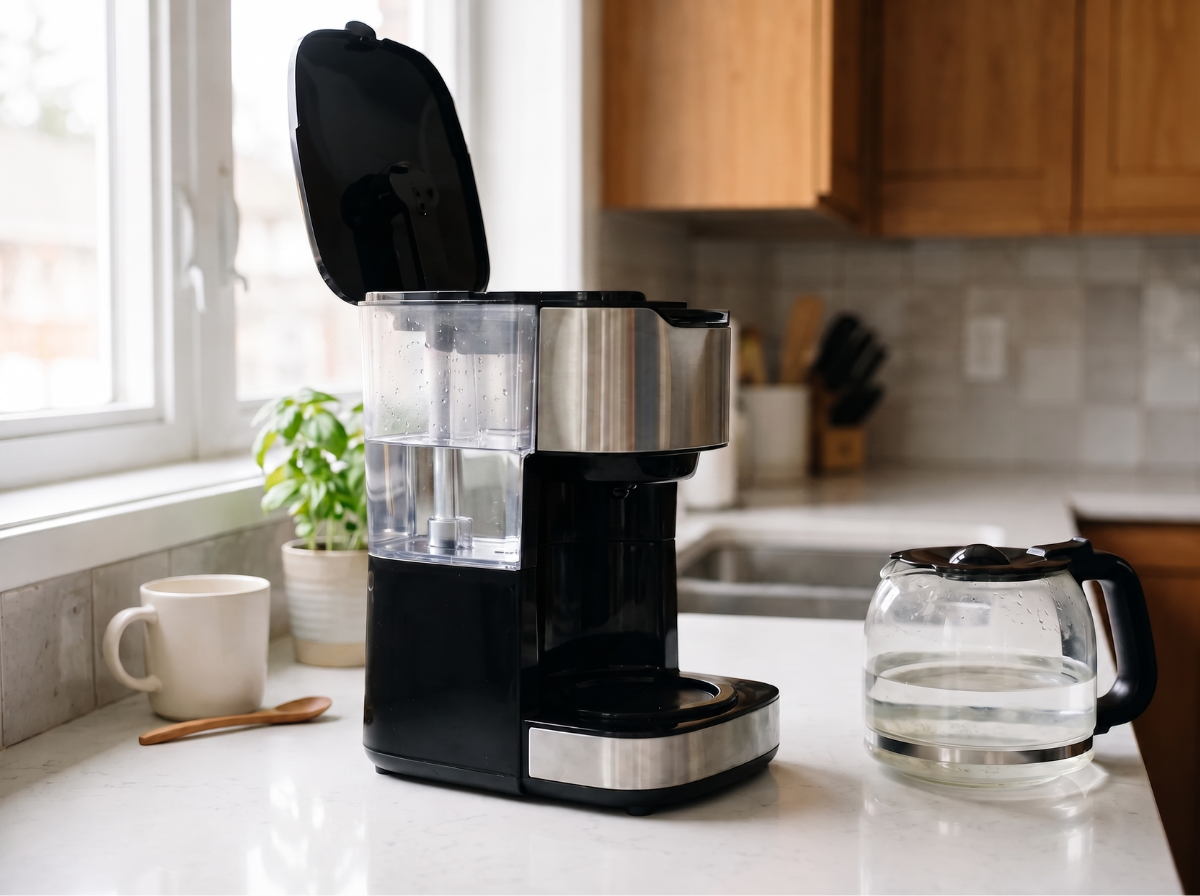
Repair or replace? A quick cost comparison
Whether a leak is worth fixing depends on the cause and the machine. A basic drip maker is often not worth a paid repair, while a mid-range pod brewer or a good espresso machine usually is. Treat the ranges below as Barrie-area planning figures, not quotes.
| Cause of the leak | Typical fix | DIY or pro? | Rough cost |
|---|---|---|---|
| Overfilled or crooked reservoir | Reseat and refill correctly | DIY | $0 |
| Scale in valve or tubing | Descale, repeat if needed | DIY | $10 to $25 (solution) |
| Worn reservoir gasket | Replace the seal | DIY or pro | $15 to $60 |
| Loose or split internal hose | Reclamp or replace hose | Pro | $80 to $150 |
| Cracked tank or brew chamber | Replace the part | Pro or replace unit | $60 to $180 |
| Failing pump or heater gasket | Open housing, reseal or replace | Pro | $120 to $220+ |
Save your money
If the machine is under a few years old and the leak is a gasket, valve, or scale issue, repair almost always beats replacement. If it is an entry-level drip maker and the fault is the pump or a cracked tank, a new unit is often the smarter spend. When in doubt, a quick diagnosis settles it.
Download the free quick guide
A one-page checklist to trace a leak from the bottom and decide whether to fix or replace.
Frequently Asked Questions
Still finding a puddle after descaling and reseating the tank? That usually means the leak is internal, and that is where it pays to have someone open the machine safely. Max Appliance Barrie repairs coffee makers, espresso machines, and major kitchen appliances across Barrie, Innisfil, Alliston, and the surrounding Simcoe County towns. Get in touch, and we will diagnose the leak before it damages your counter.