
Dishwasher Leaving White Residue? The Barrie Hard Water Solution
If your glasses come out cloudy and your racks wear a chalky film, dishwasher white residue is almost always a hard water problem, not a broken machine. Barrie and most of Simcoe County sit on limestone-rich groundwater, so the tap water feeding your dishwasher carries a heavy load of dissolved calcium and magnesium. When the hot cycle dries, those minerals stay behind as a white haze on dishes, the tub, and the heating element. Before booking a service call, it is worth knowing which kind of residue you are actually looking at.
There are two distinct culprits that leave white marks, and they require opposite fixes. Getting the diagnosis wrong can cause months of unnecessary effort while the real problem persists. Here is how to tell them apart and clear them up for good.
What causes dishwasher white residue in Barrie
Water hardness is measured in grains per gallon or milligrams per litre of dissolved minerals. Anything above roughly 7 grains per gallon is considered hard, and much of the water across Barrie, Innisfil, and the surrounding county runs well past that threshold. Every time your dishwasher heats and dries a load, the water evaporates and the minerals it carries settle on the first surface they touch, usually your glassware and the stainless steel tub.
Detergent formulas matter as well. Modern dishwasher tablets removed phosphates for environmental reasons, which were the key ingredients that used to bind hard water minerals and rinse them away cleanly. Without phosphates, hard water combined with lower-quality detergent leaves significantly more deposits than it did a decade ago. For detailed information on local mineral content and water testing across Ontario, the Walkerton Clean Water Centre resources provide helpful insights.
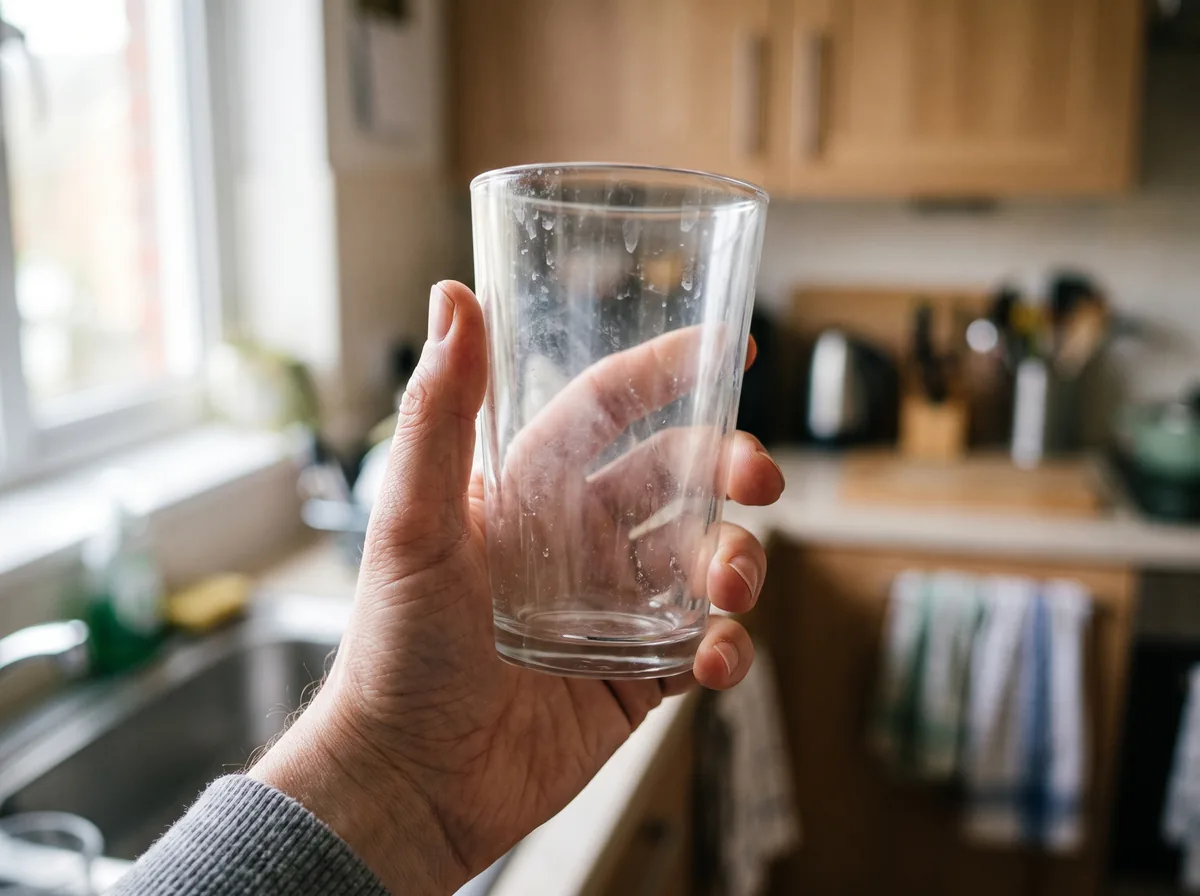
Hard water film versus detergent etching
This distinction trips up most homeowners. While both issues leave a cloudy appearance, they are fundamentally different underneath, and only one can be reversed.
Hard water film is a physical mineral deposit resting on top of the glass. It wipes or dissolves off easily with an acid like white vinegar or citric acid. Detergent etching, on the other hand, is permanent microscopic pitting in the glass surface caused by excess detergent, softened water, or high temperatures without sufficient food soil to buffer the wash. Etched glass remains cloudy regardless of cleaning efforts because the physical surface is damaged.
Did you know?
You can distinguish film from etching in minutes. Soak a hazy glass in plain white vinegar for five minutes. If it comes out clear, you are dealing with removable hard water film. If it remains cloudy, the glass is etched. Etching stems from detergent dosage issues rather than hard water mineral buildup.
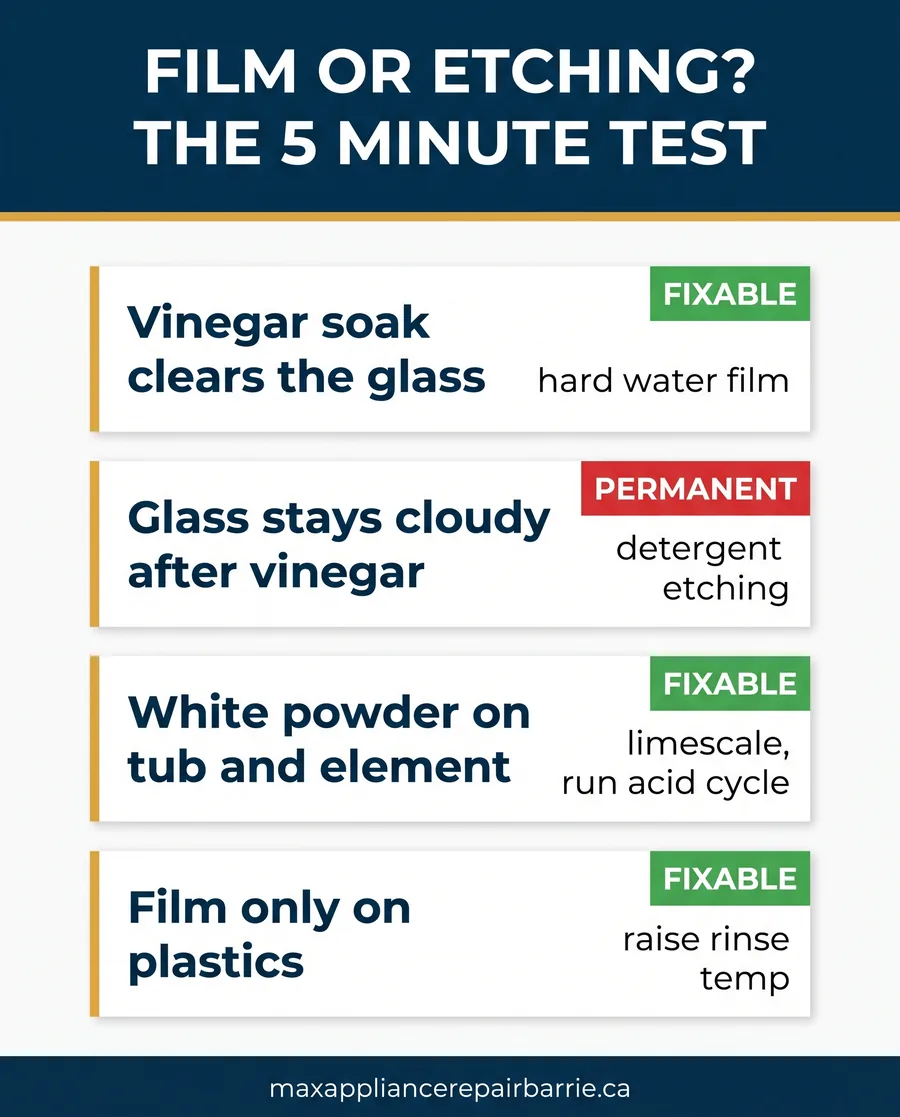
A two-minute test to identify your residue
Run this quick diagnostic check before modifying your wash routine. Match your observations to the chart below to determine the precise solution required.
| What You Notice | Likely Cause | Recommended Action |
|---|---|---|
| Vinegar soak clears the glass | Hard water mineral film | Add rinse aid, run citric acid, raise water temp |
| Glass stays cloudy after vinegar | Detergent etching (permanent) | Reduce detergent dose, stop pre-rinsing dishes |
| White powder on tub and heating element | Limescale buildup from hard water | Run a citric acid or vinegar maintenance cycle |
| Gritty white specks on dishes | Undissolved detergent or clogged spray arm | Verify water temperature, clear spray arm nozzles |
| Film appears only on plastics | Low final rinse temperature | Enable heated dry or increase hot water heater temp |
Does extra detergent eliminate cloudy residue?
In most cases, extra detergent makes the issue worse. If glassware is etched, more detergent accelerates permanent surface damage. If the root cause is mineral film, the missing factor is adequate rinse aid and high water temperature. Try reducing your detergent dosage by half while using a dedicated rinse aid agent.
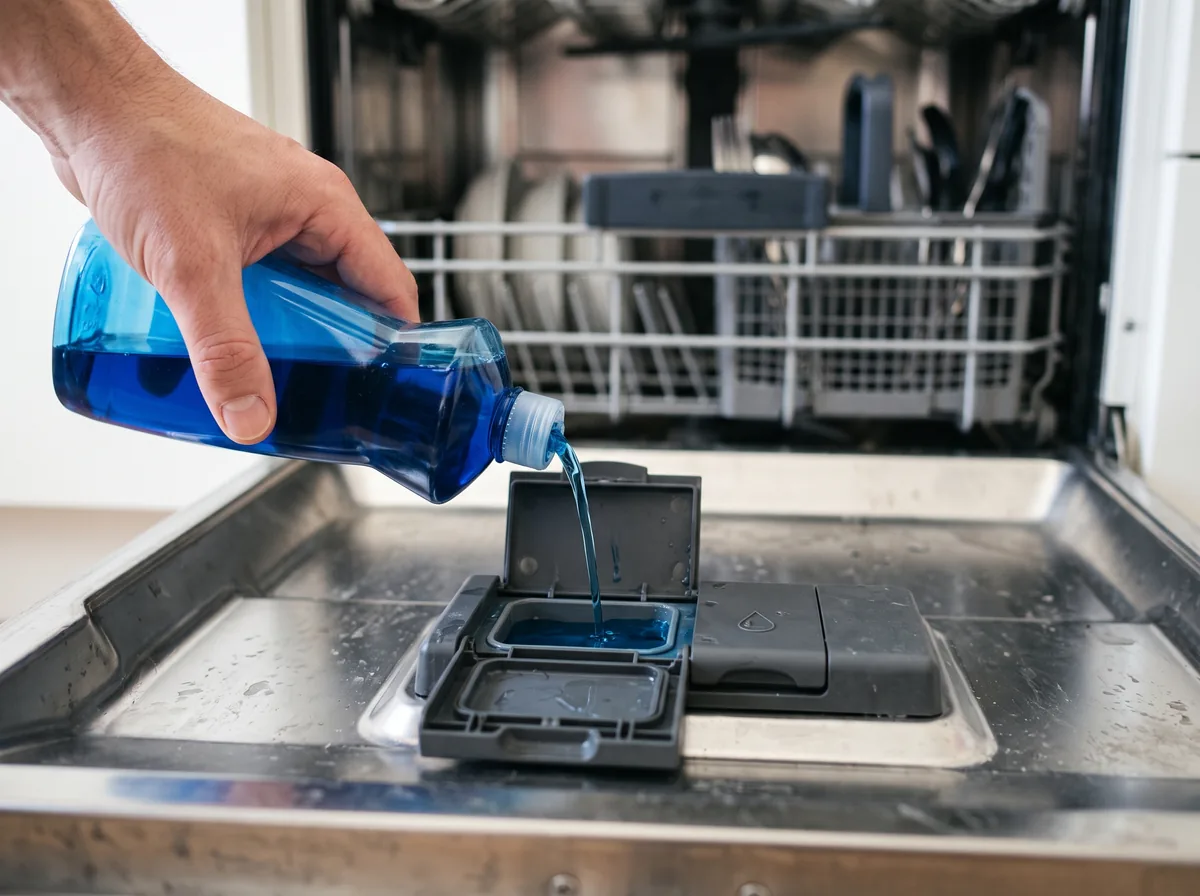
How to clear white residue for good
- Clean the filter: Remove the bottom rack, twist out the filter cylinder, and wash accumulated food debris under hot running water. Clogged filters recirculate mineral-heavy wash water.
- Clear spray arms: Detach spray arms where possible and clear blocked jet nozzles using a small pin or toothpick to restore full water pressure.
- Perform an acid cycle: Place a bowl with two cups of white vinegar on the upper rack (or use a commercial citric acid appliance cleaner) and run a full cycle at maximum temperature while empty.
- Fill the rinse aid dispenser: Rinse aid reduces surface tension, allowing water to sheet off surfaces rather than drying into spots.
- Adjust detergent quantities: Overdosing detergent in hard water leaves chalky deposits. Start with half a tablet and increase only if food removal is incomplete.
- Skip pre-rinsing: Detergents require food soil particles to react properly. Scrape large debris into compost without fully rinsing dishes prior to loading.
- Verify supply temperature: Ensure incoming water reaches 120°F to 140°F (49°C–60°C). Run hot water at the kitchen sink tap before starting a dishwashing cycle.
Save on unnecessary repair costs
Citric acid and rinse aid address the vast majority of hard water buildup issues in local homes. Utilizing these adjustments for two weeks generally resolves film deposits before professional service becomes necessary.
Keeping hard water off your dishes
Maintaining clear glassware requires consistent prevention. Keep rinse aid dispensers filled, execute a monthly citric acid maintenance cycle, and adjust your machine’s rinse aid output setting higher if available. If your home uses a water softener, ensure salt levels and regeneration schedules are regularly maintained.
For rural homes on private wells across Oro-Medonte or Springwater, point-of-use or whole-home water softening system maintenance provides the most reliable long-term protection against hard water deposits. If your appliance displays other mechanical issues alongside film buildup, review our guide on resolving incomplete dishwasher cycles.
Pro Tip
Angle glasses on an incline rather than placing them completely upright. Water pools in concave bases when items are flat, evaporating into mineral rings. A slight tilt ensures water drains off completely during the final rinse cycle.
Download the free quick guide
A reference checklist to clear dishwasher white residue and prevent hard water buildup on your dishware.
When residue means a real repair
While film is usually tied to water composition and settings, certain symptoms indicate component failures. Gritty particulate combined with white deposits often signals clogged spray arms or a deteriorating circulation pump. If the wash chamber fails to heat properly, a faulty heating element or water inlet valve may be preventing proper thermal rinsing, requiring professional technical evaluation.
Frequently Asked Questions
Still fighting dishwasher white residue after trying a vinegar wash, or noticing your appliance runs cold? Max Appliance Repair provides expert diagnostics and service for dishwasher repair in Barrie, Innisfil, and Alliston. Get in touch with our Barrie dishwasher white residue repair team to determine whether your issue stems from local water conditions or a mechanical fault before replacing any parts.