Why Is My Dryer Tearing Clothes? What to Check Before Calling a Pro
Last updated: August 11, 2026
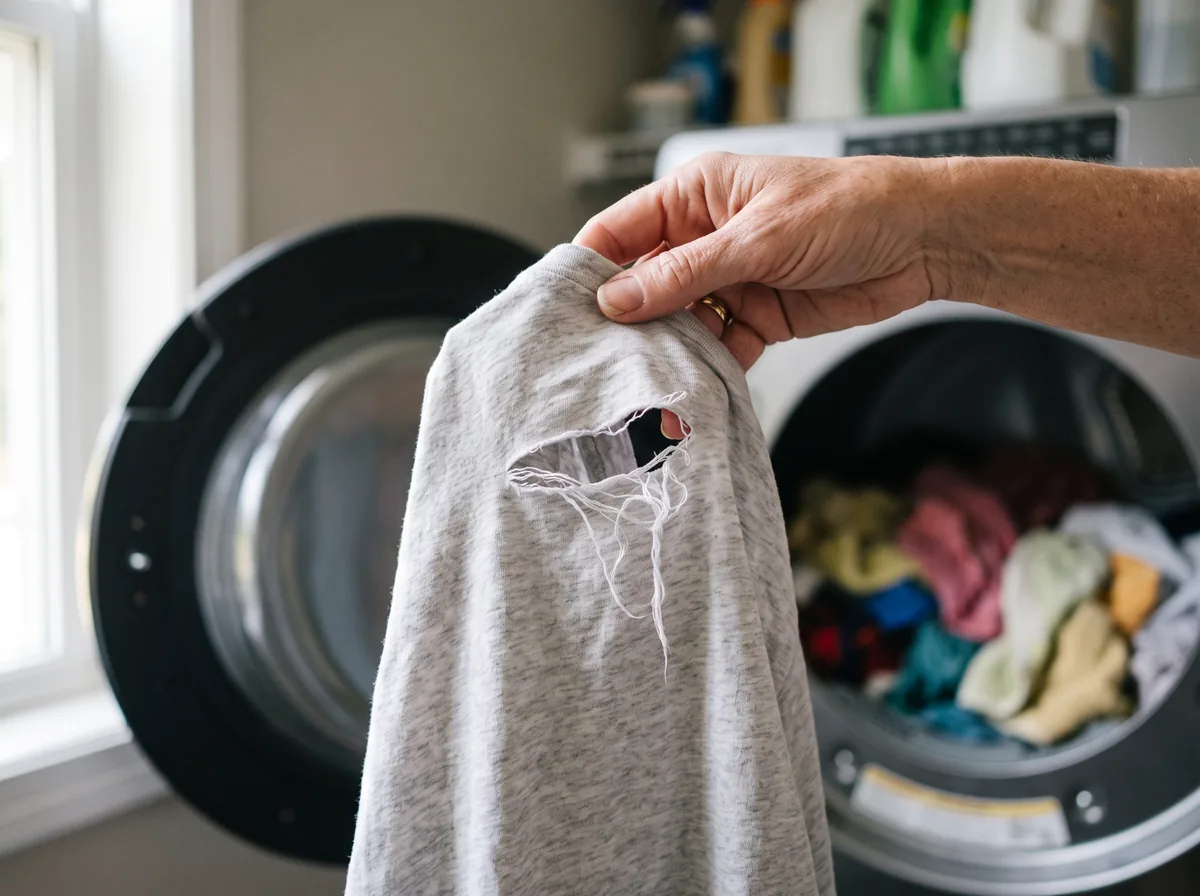
A dryer tearing clothes is almost never the fabric giving up. It is a small, sharp, or rough spot inside the drum that snags cloth as it tumbles, and the usual suspects are a cracked drum baffle, worn felt seals, a stray object caught in a gap, or the drum glides that have worn down to bare metal. Before you book dryer repair in Barrie, run the quick checks below. Plenty of Barrie homeowners find the culprit in ten minutes with a flashlight and a nylon stocking.
Ignoring it gets expensive fast. A few ruined shirts turn into ruined sheets, and the same rough edge that shreds cotton can wear a hole through the drum seal and let laundry slip behind the drum. Here is how to find the snag point and stop it.
First look: confirm it is the dryer, not the wash
Before you blame the dryer, rule out the washer and the laundry itself. A washing machine with a torn drum seal or a broken agitator can shred fabric too, and so can an overloaded wash where zippers, hooks, and Velcro grind against softer items. Pull a damaged garment and look at the tear. Clean straight rips and pulled threads usually mean a snag on a hard surface. Frayed, chewed-up damage across a whole load can point back to the wash cycle instead.
If the damage only shows up after drying, and it lands on the same kind of items every time, the dryer drum is the place to look. Small delicate pieces like tights, thin cotton tees, and pillowcases are the first casualties because they slip into narrow gaps a towel would never reach.
Quick take
Straight, clean tears and pulled threads that appear only after drying point to a snag inside the drum. Chewed, all-over damage across a full load points back to the washer or an overloaded, tangled wash. Sort out which machine is at fault before you start pulling the dryer apart.
What causes a dryer tearing clothes
Inside every dryer drum are a handful of parts that are supposed to be smooth. When one of them cracks, wears, or works loose, it turns into a snag point that catches fabric on every rotation. The common causes are:
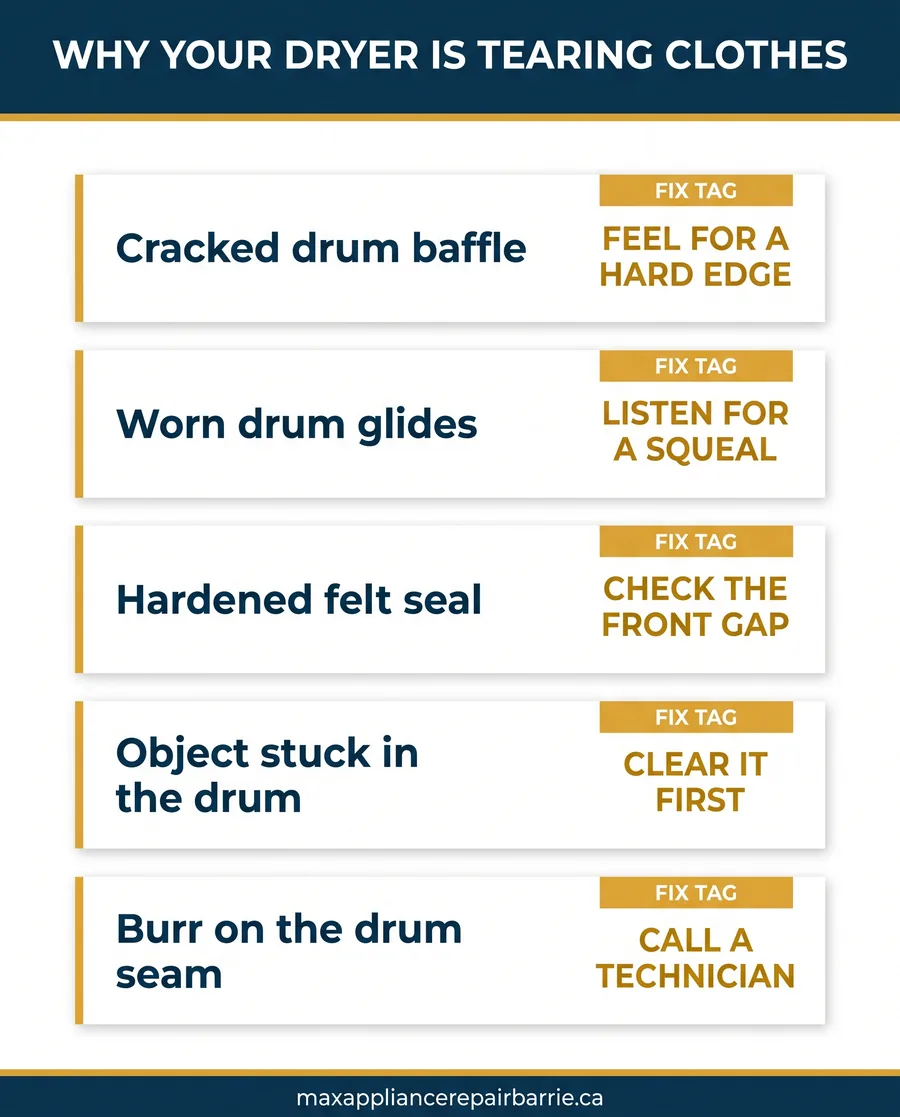
- A cracked or broken drum baffle, the raised fin that lifts and tumbles the load. A split edge grabs cloth.
- Worn drum glides or slides, the small plastic pads the drum front rides on. Once they wear through, the drum drops and scrapes metal.
- A torn or hardened felt seal at the front or rear of the drum, leaving a rough gap that snags thin items.
- A coin, bra underwire, hair pin, or screw wedged in the lint area or the gap around the drum.
- A worn or frayed drum, or a lifted seam weld inside an older drum, with a burr sharp enough to cut.
Did you know
The felt seals around a dryer drum are wear parts, not permanent fixtures. Years of heat and tumbling harden and flatten them until they no longer bridge the gap between the spinning drum and the fixed bulkhead. That opening is exactly wide enough to catch a shirt corner or a sock and pull it through, which is why so many snags start there.
Cracked baffles and rough drum seams
The baffles, sometimes called lifters or fins, are the raised ridges bolted to the inside wall of the drum. Their whole job is to catch the load and tumble it. That constant catching also means they take a beating, and a baffle that has cracked, split, or worked loose leaves a hard edge or an exposed screw right in the path of your laundry.
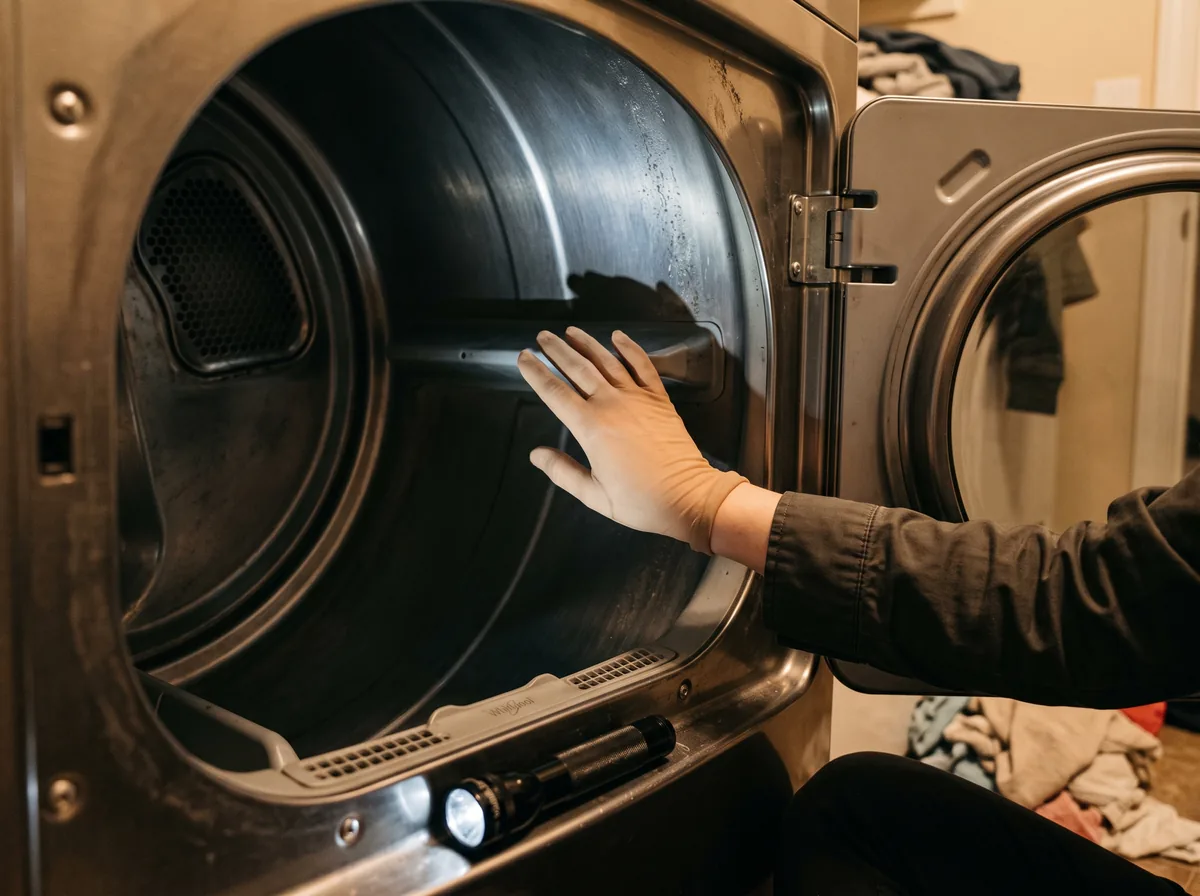
Run your hand slowly around each baffle with the dryer unplugged. You are feeling for a rough seam, a lifted edge, a crack, or a screw head that sits proud of the plastic. Do the same across the flat drum wall and the seam where the drum is joined. On older units, that welded seam can develop a burr sharp enough to score fabric. A cracked baffle is a common repair, and it is usually cheaper to catch early than a washer repair that follows a load of ruined clothes.
Pro tip
Slide an old nylon stocking or a knee-high over your hand and run it around the inside of the drum. The nylon snags and pulls on any rough spot, burr, or lifted edge you would miss with bare fingers. It is the fastest way to find the exact point that is catching your clothes, and it costs nothing.
Worn drum glides and felt seals
If the tearing comes with a new squeal or a scraping sound, suspect the drum glides. These small plastic or nylon pads support the front of the drum and let it spin quietly. They wear down over years, and once they wear through, the drum sags and rides on the metal bulkhead. That drop opens a gap at the front seam and drags a sharp metal edge across anything that reaches it.
| Snag point | What you notice | DIY or pro |
|---|---|---|
| Cracked drum baffle | Clean tears, snags on many items, sometimes a rattle | DIY if comfortable, part is cheap |
| Worn drum glides | New squeal or scrape, drum sags, tears at the front | Pro if you are unsure |
| Hardened felt seal | Thin items pulled into a gap, lint escaping the drum | Pro, involves opening the cabinet |
| Object stuck in the drum gap | Sudden tearing, a clicking or ticking sound | DIY, clear the object first |
| Burr on the drum seam | Fine cuts or scores in a repeating spot | Pro, drum may need replacing |
Save your money
A dryer that snags clothes is often just as hard on itself. The same worn seal that catches a shirt lets hot air and lint leak past the drum, which makes the dryer run longer and use more power to finish a load. Fixing the snag early protects your clothes and trims the energy the dryer wastes on every cycle.
Stray objects caught in the drum
Sometimes the cause is not a worn part at all. It is a coin, a bra underwire, a bobby pin, a nail, or a small screw that has slipped through a pocket and lodged in the gap around the drum or the lint chute. As the drum spins, that hard object scrapes past the seal and rakes your laundry. A sudden onset of tearing, especially with a new clicking or ticking sound, is the classic sign of something wedged where it should not be.
With the dryer unplugged, shine a flashlight around the front and rear seals and into the lint trap housing. Reach in carefully and check the gap at the top and bottom of the drum front. Clearing a trapped object is often the whole fix, and it is the first thing worth checking because it costs nothing and takes minutes.
People often ask: why did my dryer suddenly start ripping clothes?
A dryer that was fine yesterday and shreds a load today usually has something caught in it. A coin, underwire, or screw that worked loose from a pocket lodges in the drum gap and cuts fabric on every turn. Unplug the dryer, check the seals and lint housing with a flashlight, and clear anything hard you find. If the tearing continues after the drum is empty and clear, a glide, seal, or baffle has likely worn out and needs attention.
How to find the exact snag point
- Unplug the dryer, or shut off the breaker and gas valve for a hard-wired or gas model. Confirm it is fully powered off.
- Empty the drum and pull the lint screen. Clean the trap and check the slot it sits in for lint packed around a hard object.
- Slide a nylon stocking over your hand and run it slowly around the entire drum wall, every baffle, and both front and rear seams.
- Watch and feel for the nylon snagging. That catch marks your snag point. Note whether it is a baffle, a seam, or the seal gap.
- Shine a flashlight into the front and rear felt seals and the lint chute. Look for a torn seal, a worn glide, or a trapped object.
- Clear any object you find and gently smooth or tape over a minor burr as a temporary measure only, not a permanent repair.
- Run a test load of old rags or towels you do not mind losing. If they come out clean, you found it. If not, book a technician.
Red flag: tearing that keeps coming back
If you clear the drum, check every seal, and still get torn laundry, the damage is likely coming from a worn glide, a hardened seal, or a burr on the drum itself, parts that sit behind the front panel. At that point you are guessing, and each test load risks another ruined garment. A technician can pull the front, find the exact worn part, and replace only what failed instead of you working blind.
When to call a technician in Barrie
Call for service when the drum is empty and clear but clothes still tear, when you hear a squeal or scrape that points to worn glides, when a felt seal is torn or flattened, or when the drum seam has a burr you cannot safely smooth. Those repairs mean opening the cabinet, and the felt, glides, and drum have to be reassembled correctly so the seal holds. For a broader look at how dryers wear and what parts fail, the dryer repair guides from PartSelect are a solid reference. We diagnose the drum properly and replace only the part that actually failed, so you stop feeding the machine ruined laundry.
Download the free quick guide
A one-page checklist to find the snag point tearing your laundry and check the drum safely before calling a pro.
Frequently Asked Questions
Still pulling torn shirts out of a dryer you cannot diagnose? Max Appliance Barrie fixes drums, seals, glides, and baffles across Innisfil, Alliston, Orillia, and the wider Barrie region. Book a dryer diagnosis and we will find the snag point, not just replace parts and hope.