
What Does a Burning Smell from My Washing Machine Mean?
Last updated: August 11, 2026
You start a load of towels, walk away, and a few minutes later catch a sharp, hot smell drifting from the laundry room. Maybe it is faint and rubbery, maybe it is the unmistakable bite of scorched plastic or electrical wiring. A washing machine burning smell is one of those warnings you should never wave off, because it usually means a part is overheating right now, while the machine is running. The good news is that most causes are identifiable, and many are repairable before they turn into something dangerous. If your machine smells hot, our team handles washing machine repair across Barrie and Simcoe County and can diagnose it quickly.
This guide walks through what a burning smell from a washing machine actually means, how to tell the harmless causes from the dangerous ones, and exactly what to do in the first sixty seconds.
Safety first: The tips here are for general guidance only. Max Appliance Repair Barrie is not responsible for any damage, injury, or cost resulting from action taken based on this content. If you smell burning or see smoke, unplug the appliance at the wall (or switch off its breaker) and stop using it. Never bypass a safety device. Anything involving gas lines must be handled by a TSSA-licensed technician, and major electrical work by a qualified professional. When in doubt, stop and call a pro.
In this article
First, do this if you smell burning
Red flag: stop the machine now
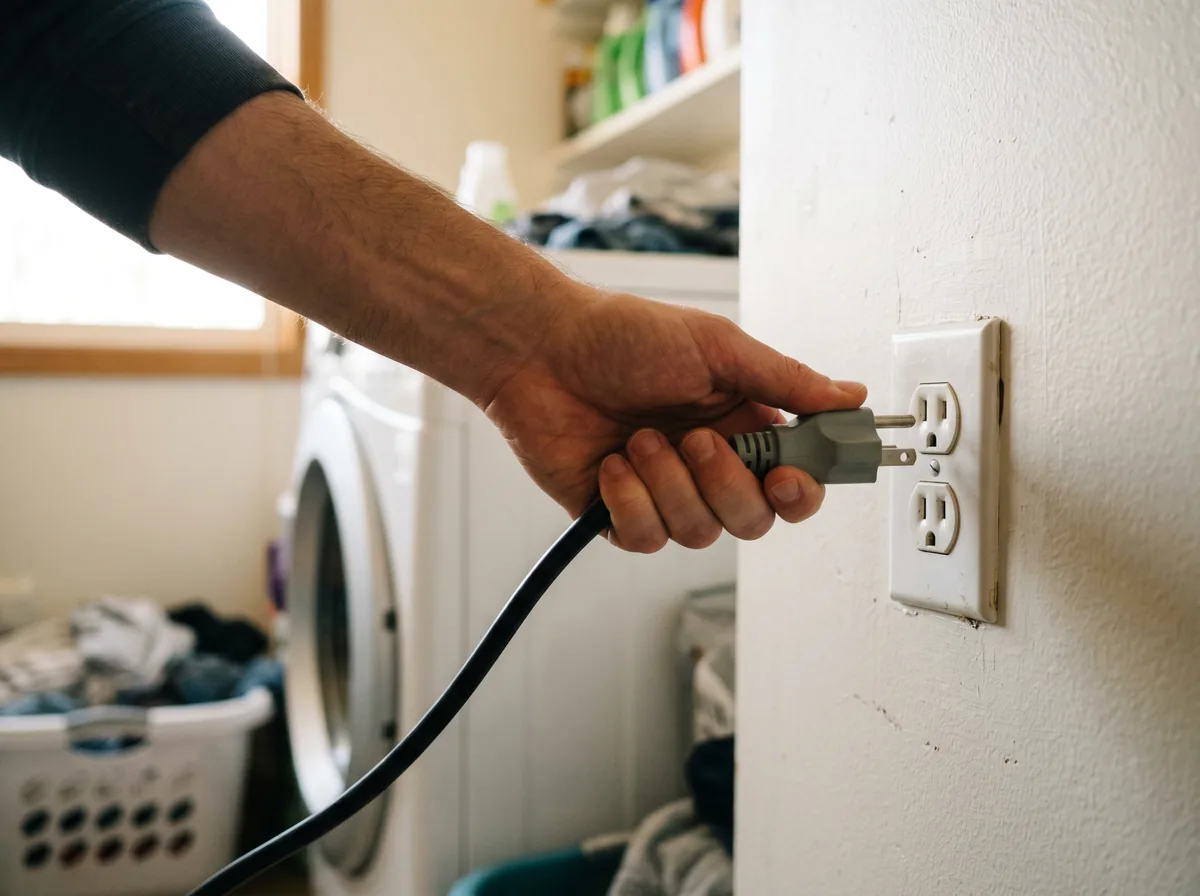
If you smell burning, smoke, or see any sign of melting, do not wait for the cycle to finish. Stop the washer, unplug it from the wall, and if you cannot reach the plug, switch off the breaker that feeds the laundry room. Do not run another load to “test” it. A part that is hot enough to smell is hot enough to fail, and a failing motor or wiring connection is the most common appliance fire risk in a home. Let the machine cool, then look and listen before you decide anything.
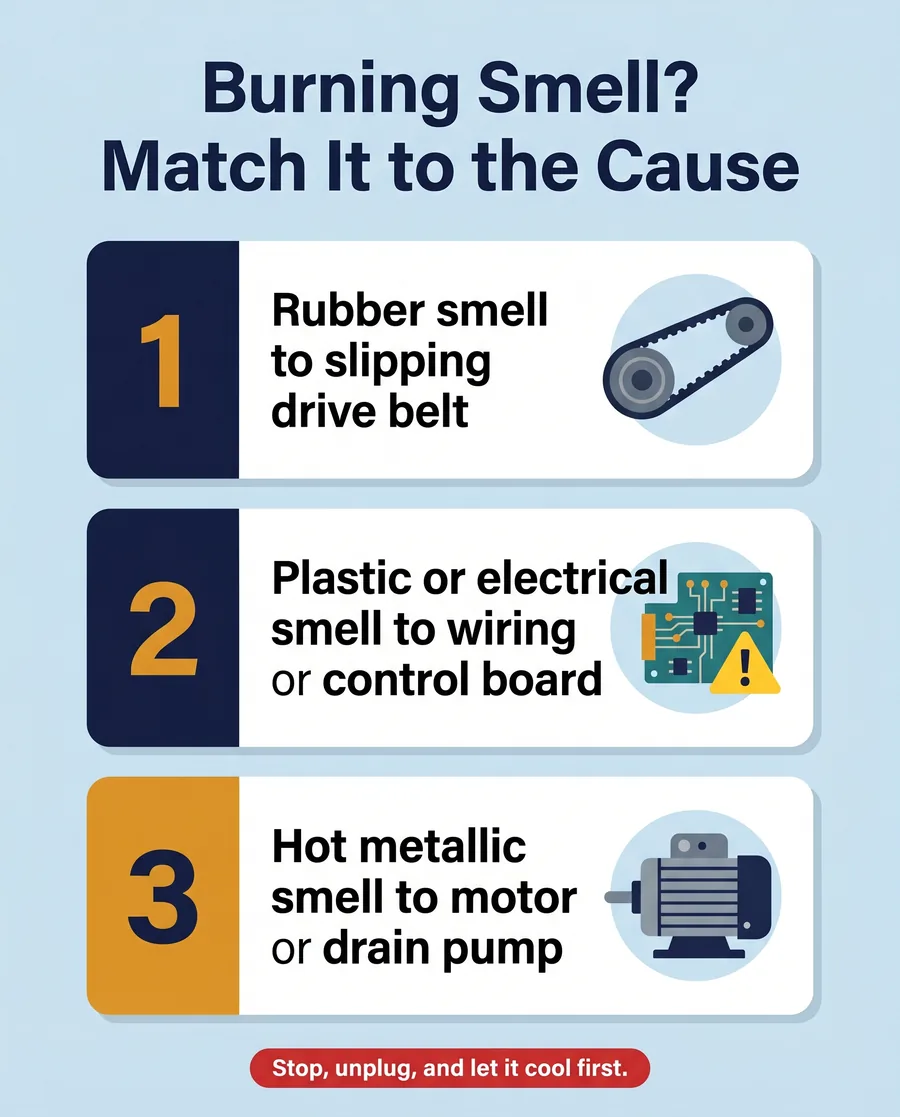
Once the washer is off and cool, you can usually narrow down the cause by the type of smell. The three you will run into most often are burning rubber, hot or melting plastic, and a sharp metallic or electrical odour. Each points to a different part of the machine.
What a burning smell actually means
A washer turns electricity into motion, and motion creates friction and heat. When everything is healthy, that heat stays within safe limits. A burning smell means something has crossed that line: a belt is slipping against a pulley, a motor is straining, a bearing has seized, or an electrical connection is arcing. The smell is the by-product of a material getting hotter than it was designed to.
That is why the smell matters more than almost any other symptom. A noisy washer might just need a level adjustment. A washer that smells like it is burning is telling you energy is being wasted as heat in the wrong place, and that is the start of most serious failures.
Burning rubber: belts and friction
A hot rubber smell, sometimes with a faint haze, usually points to the drive belt. Many top-load and some front-load washers use a rubber belt to spin the drum. Over years of use the belt can stretch, glaze, or slip, and a slipping belt dragging against a stuck pulley smells exactly like burning rubber. You may also notice the drum struggling to spin up to speed or stopping mid-cycle.
- Worn or slipping drive belt. The classic cause of a rubber smell. The belt needs inspection and usually replacement.
- Something jammed in the drum or tub. A sock, an underwire, or a coin lodged where the drum meets the tub can stall rotation and overheat the belt or motor.
- A seized pulley or idler. If the part the belt rides on no longer turns freely, the belt burns against it.
People often ask: can I keep using the washer if it only smells a little?
No, and here is why. A faint burning smell is the early stage of a problem, not a separate, milder problem. A belt that is just starting to slip today is a belt that snaps next week, often mid-spin with a full tub of water. Worse, the same heat that produces a “little” smell can scorch nearby plastic or wiring. Treat any burning smell as a stop signal and get the machine looked at before the next load.
Hot plastic or wiring: electrical faults
A smell of melting plastic or that sharp, acrid “electrical” odour is the one to take most seriously. It usually means an electrical component is overheating: a control board, a wire connector, the wiring to the motor, or a failing capacitor. Modern washers pack a lot of electronics behind the panel, and a loose or corroded connection can heat up and char its housing.
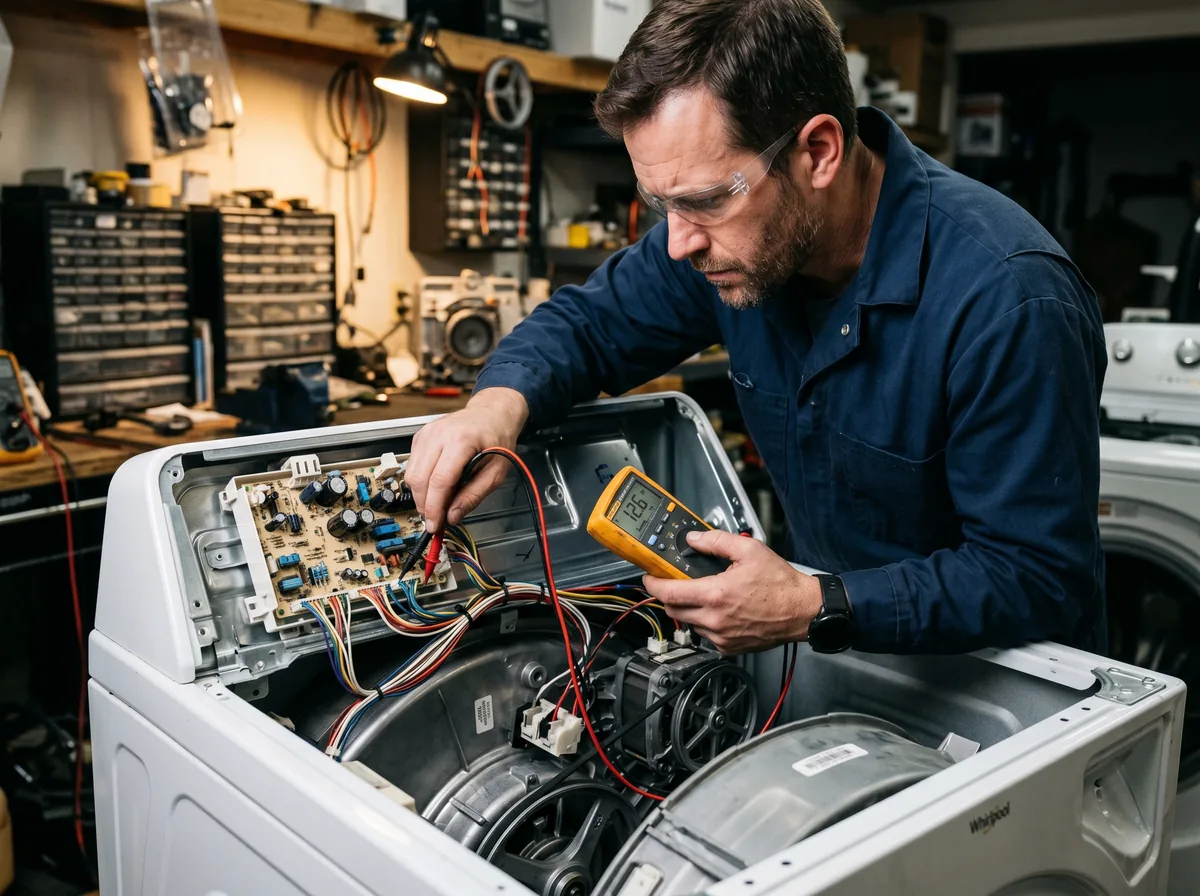
This is not a DIY area. Diagnosing and repairing electrical faults safely means working with the machine unplugged, knowing how to test connections, and using the correct replacement parts. If the smell is plastic or electrical, leave the panel closed and book a professional. Our washer repair technicians in Barrie carry the test gear and common parts to fix these on the first visit in most cases.
A hot, metallic smell: the motor or pump
A hot metallic smell, sometimes with the washer humming but not spinning, often points to the drive motor or the drain pump. A motor whose bearings are failing has to work harder and runs hot. A drain pump with a small object jammed in the impeller can stall and overheat as it tries to push water that is not moving.
- Overworked drive motor. If the drum will not turn freely by hand with the machine off, the motor may be straining against a mechanical jam or worn bearings.
- Blocked or seized drain pump. Listen for a buzzing during the drain phase. A blocked pump runs hot and can smell faintly of hot metal or plastic.
- Failed start capacitor. On some models, a weak capacitor makes the motor strain to start, which produces heat and a smell.
Save your money: clear the filter and check pockets
Before you assume the worst, two free checks can save a service call on minor cases. First, always empty pockets and use a mesh bag for small items so coins and underwires never reach the pump or tub. Second, many front-load washers have an accessible drain pump filter at the bottom front; with the machine off and unplugged, clearing lint and debris from it can stop a strained, smelly pump. If the smell returns after a clean filter, the problem is mechanical and needs a technician.
Why a new washer can smell hot at first
Not every burning smell is a failure. A brand-new washer, or one that has just had a part replaced, can give off a faint hot smell for the first few cycles as protective coatings and manufacturing residue burn off the motor and heating element. This usually fades within two or three loads and smells more like warm dust than scorched rubber or plastic.
The way to tell the difference: a break-in smell is faint, gets weaker each cycle, and is never accompanied by smoke, a tripped breaker, or a drum that struggles to spin. If the smell is strong, getting worse, or paired with any of those signs, treat it as a fault and stop using the machine.
What these repairs typically cost
Pricing note: The figures on this page reflect typical market rates in Barrie and Simcoe County as of 2026. What you actually pay depends on the make and age of the appliance, the parts involved, and how easy it is to access. Always get a written quote or an in-person diagnosis before approving a repair.
Repair costs depend on the part and the make of your washer. The ranges below are typical starting points for Barrie and Simcoe County in 2026, parts and labour combined, to help you sanity-check a quote.
| Likely cause | Typical repair range (2026) | Notes |
|---|---|---|
| Drive belt replacement | $160 to $300 | Common on older top-load and some front-load units |
| Drain pump replacement | $200 to $380 | Often paired with clearing a jam |
| Motor or capacitor repair | $250 to $500 | Varies widely by brand and access |
| Wiring or connector repair | $180 to $400 | Electrical fault; pricing depends on the part |
| Control board replacement | $300 to $600+ | Higher on premium and front-load models |
When to stop and call a technician
Some smells are a quick fix you can rule out yourself; others are a clear stop sign. Call a professional right away if any of the following is true.
- The smell is plastic, electrical, or comes with visible smoke or scorch marks.
- The washer trips the breaker, or you smell it at the outlet or behind the panel.
- The drum will not spin, hums, or stops mid-cycle along with the smell.
- The smell returns after you have cleared the filter and checked for jams.
- You are not fully comfortable working around the machine with the panel off.
A burning smell from a washer is one repair where waiting rarely pays off. The same heat that you can smell today is what damages the parts around it, so an early diagnosis is almost always the cheaper outcome. The same logic applies to the laundry pair next to it; if you ever notice a hot smell from the dryer, our dryer repair team in Barrie should look at that too, since dryer lint and heating elements carry their own fire risk.
Sources and further reading
- Max Appliance Repair Barrie, in-house diagnostic notes and 2026 Simcoe County service pricing observations.
- AppliancePartsPros, “Washing Machine Burning Smell: Top Problems and Fixes” (video, embedded above).
- Electrical Safety Authority (ESA), general guidance on overheating appliances and electrical fire risk.
Frequently asked questions
Is a burning smell from my washing machine dangerous?
It can be, so treat it as a stop signal. A burning smell means a part is overheating, and overheating is the leading cause of appliance fires in the home. The safest response is to stop the cycle, unplug the washer, and let it cool before you investigate. A faint rubber smell from a slipping belt is less urgent than a sharp plastic or electrical smell, but neither should be ignored. If you see smoke, smell melting plastic, or the breaker trips, do not use the machine again until a technician has checked it.
Why does my washing machine smell like burning rubber?
Burning rubber almost always points to the drive belt. Many washers use a rubber belt to spin the drum, and over time it can stretch, glaze, or slip against the pulley. A slipping belt dragging on a stuck pulley smells exactly like hot rubber, and you may also notice the drum struggling to reach full spin. A jammed item, such as a coin or an underwire, can also stall the drum and overheat the belt. Stop using the washer and have the belt and pulley inspected before the belt snaps mid-cycle.
Can I keep using my washer if the smell goes away?
No. A burning smell that comes and goes is still a warning that a part is overheating under load. The smell fading does not mean the cause is gone; it often just means that part has cooled between cycles. Running more loads keeps stressing a belt, motor, or connection that is already failing, and the next overheating episode could be worse. The cheapest and safest path is to have the machine diagnosed while the fault is still small. Continuing to run it risks both a bigger repair bill and a safety hazard.
My new washing machine smells hot. Is that normal?
Often, yes, for the first few cycles. A brand-new washer or one with a freshly replaced motor can give off a faint hot, dusty smell as protective coatings and manufacturing residue burn off. This should be mild and fade with each load, usually within two or three cycles. What is not normal is a strong smell of rubber, plastic, or electrical burning, or any smell paired with smoke, a tripped breaker, or a drum that will not spin. If the smell is intense or getting worse, stop using the machine and have it checked.
How much does it cost to fix a washer that smells like it is burning?
It depends on the part. In Barrie and Simcoe County in 2026, a drive belt replacement often runs about $160 to $300, a drain pump $200 to $380, and motor or capacitor work $250 to $500, parts and labour combined. Electrical and control board repairs can be higher, especially on front-load and premium models. These are typical ranges, not quotes; the real figure depends on your make, model, and how accessible the part is. A proper in-person diagnosis is the only way to get an accurate price.
The bottom line
Quick verdict
A washing machine burning smell is your machine telling you a part is overheating right now. Rubber points to the belt, plastic or electrical points to wiring and is the most urgent, and a hot metallic smell points to the motor or pump. Stop the machine, unplug it, and diagnose by smell. When in doubt, leave the panel closed and call a technician; this is one repair where acting early is almost always the cheaper choice.
Download the free quick guide
Keep our one-page guide handy so you know what each smell means and the first steps to take if your washer ever smells hot.
Washer smelling hot in Barrie or Simcoe County?
A burning smell is not something to live with. We service Barrie, Innisfil, Orillia, Oro-Medonte, Bradford, Wasaga Beach, Collingwood, and Alliston, and we carry common washer parts on the truck. Book a washing machine diagnosis or learn more about our team. We will find the cause and tell you honestly whether it is a quick fix or time to replace.