My Washing Machine Won’t Spin: Common Causes and What to Do Next
Last updated: August 11, 2026
If your washing machine won’t spin, the cause is almost always one of a handful of things: an unbalanced load, a lid or door that isn’t latching, water still sitting in the tub, or a worn belt, coupler, or clutch. Start by unplugging the machine and redistributing the laundry. If that doesn’t fix it, you are likely looking at a mechanical part that needs replacing, and our washer repair service in Barrie can pin it down fast.
This guide walks through every common reason a washer stops spinning, what you can safely check yourself in a few minutes, and where the line sits between a quick DIY fix and a call to a technician. No jargon, no upsell, just the order a good repair tech would work through it.
Start here: the 60-second checks
Before you assume the worst, rule out the easy stuff. A surprising number of “broken” washers in Innisfil and Barrie turn out to be a lopsided load or a lid that isn’t clicking shut. These checks take about a minute and cost nothing.
First, open the lid and look at how the laundry is sitting. A single heavy item like a comforter or a bath mat can throw the drum off balance, and most machines are built to refuse to spin rather than shake themselves apart. Spread the load out evenly and try again.
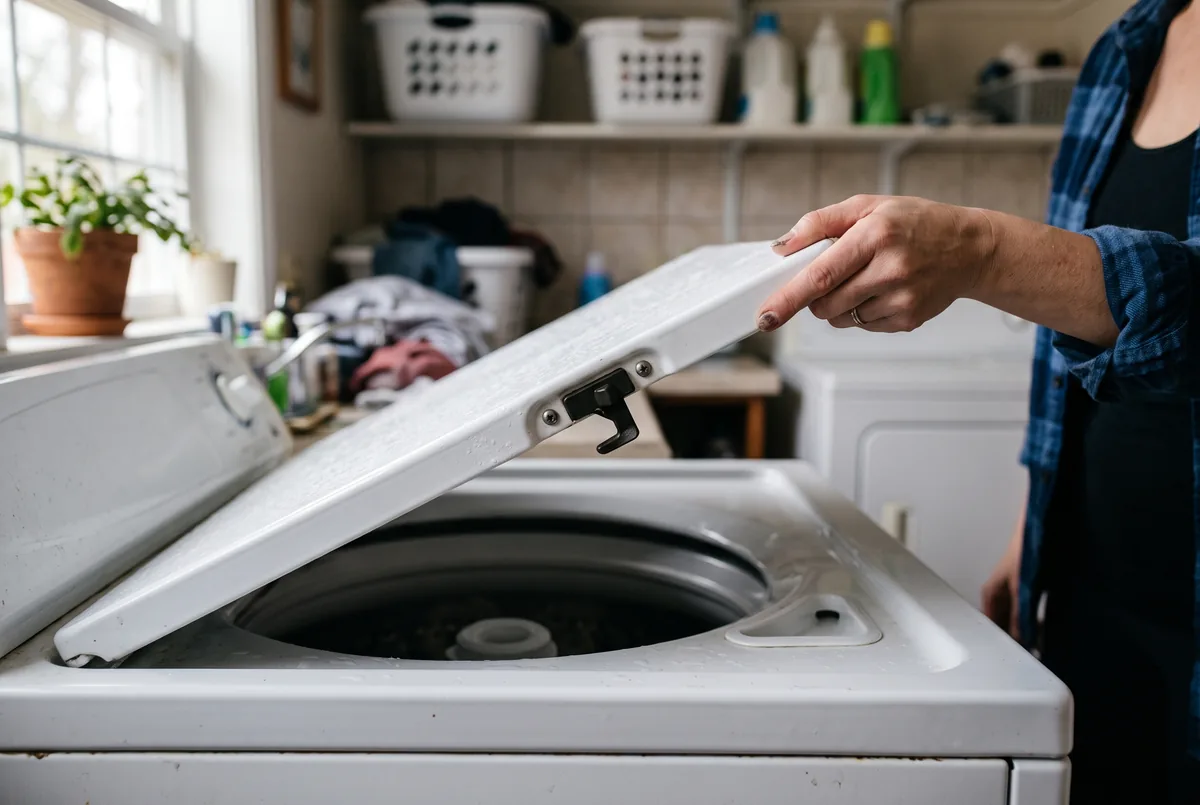
Second, listen when you close the lid or door. Top-loaders need the lid switch to signal the control board that it is safe to spin. If you don’t hear a soft click, the switch may be worn or the strike may be bent. Front-loaders use a door lock that does the same job.
Third, check whether the tub still has water in it. A washer will not spin on a full tub, so a drain problem often looks like a spin problem. If you see standing water, the issue is drainage, not the motor.
People often ask: why does my washer fill and drain but not spin?
When a washer fills and drains normally but skips the spin, the fault is usually mechanical rather than electronic. The motor is getting power, but something between the motor and the drum has failed to transfer that motion. On top-loaders that points to the drive belt, motor coupler, or clutch. On front-loaders it often points to the belt or worn drum bearings. A lid switch or door lock fault can cause the same symptom, so those get ruled out first.
The most common reasons a washer won’t spin
Once the quick checks are done, it helps to know what actually breaks inside a washer. Here is the short list, roughly in the order a technician would suspect them.
Unbalanced or overloaded drum
This is the number one call we get that turns out to be free to fix. Too much laundry, or one heavy soaked item, and the machine either walks across the floor or refuses to spin. Cutting the load in half usually solves it on the spot.
Lid switch or door lock failure
The lid switch on a top-loader is a small plastic part that wears out from thousands of open-and-close cycles. When it fails, the machine thinks the lid is open and locks out the spin as a safety measure. Front-load door locks fail the same way, sometimes with an error code on the display.
Drain problem leaving water in the tub
A clogged drain hose, a sock stuck in the pump, or a blocked pump filter will leave water sitting in the drum. The control board sees a full tub and holds off on the spin. Clearing the blockage restores normal operation. If you notice a grinding or humming noise from the washer while it tries to drain, the pump itself may be jammed.
Broken drive belt
Belt-driven washers use a rubber belt to turn the drum. Over years of heat and friction the belt cracks, stretches, or snaps. When it goes, the motor runs but the drum sits still. You may smell a faint burnt-rubber odour, which is a clue worth acting on. Our post on what a burning smell from your washer means covers that in detail.
Worn motor coupler
Many top-loaders use a small plastic-and-rubber coupler between the motor and the transmission. It is designed to fail before the motor does, which makes it a cheap sacrificial part. When the coupler wears out the machine can agitate weakly or not spin at all.
Failing clutch
The clutch lets the drum ramp up to full spin speed gradually. As it wears, you get a slow, weak spin that leaves clothes soaking wet, sometimes with a burning smell and shavings in the tub. A worn clutch rarely fixes itself and usually needs replacing.
Worn tub bearings
Bearings support the spinning drum. When they wear out you hear a loud rumble or grinding that gets worse over the cycle, and eventually the drum binds up. Bearing jobs are labour-heavy because the machine has to come apart, which is why they sit at the top of the cost range.
Did you know?
Most modern washers are engineered so the cheapest parts fail first. The lid switch and motor coupler are meant to wear out and be replaced, which protects the far more expensive motor and transmission behind them. That is why a no-spin washer is often a modest repair rather than a reason to buy a new machine.
How to check your washer step by step
Please note: The steps below are for general guidance only. Always unplug the washer or switch off the breaker before you touch any part of it. A washing machine combines water and electricity, and a spinning drum can cause injury. Max Appliance Repair Barrie is not responsible for any damage, injury, or cost from work done based on this content. If you are not comfortable with any step, stop and call a qualified appliance technician. Electrical safety in Ontario is overseen by the Electrical Safety Authority of Ontario.
- Unplug the machine. Pull the plug or flip the breaker before anything else. Do not skip this even for a quick look.
- Redistribute the load. Open the lid or door, spread heavy items around the drum, and remove anything wound tight around the agitator.
- Test the lid switch or door lock. On a top-loader, press the switch under the lid by hand and listen for a click. On a front-loader, make sure the door latches firmly and check the display for a lock error.
- Check for standing water. If the tub still holds water, the problem is draining, not spinning. Look for a kinked or clogged drain hose behind the machine.
- Clear the pump filter. Many front-loaders have an access panel at the bottom front. With a towel down to catch water, open it and remove coins, lint, or a stray sock.
- Run a drain and spin cycle. With the tub empty, select drain and spin. If the drum still refuses to turn, the fault is mechanical and needs a technician.
- Note the details. Write down the brand, model number, and exactly what happens, then book a repair. That short note saves diagnostic time.
Pro tip
Before you book any repair, snap a photo of the model and serial sticker. It usually sits under the lid, inside the door, or on the back panel. Having that number ready means the technician can bring the right belt, coupler, or lid switch on the first visit instead of ordering it and coming back.
What washer spin repairs cost in Barrie
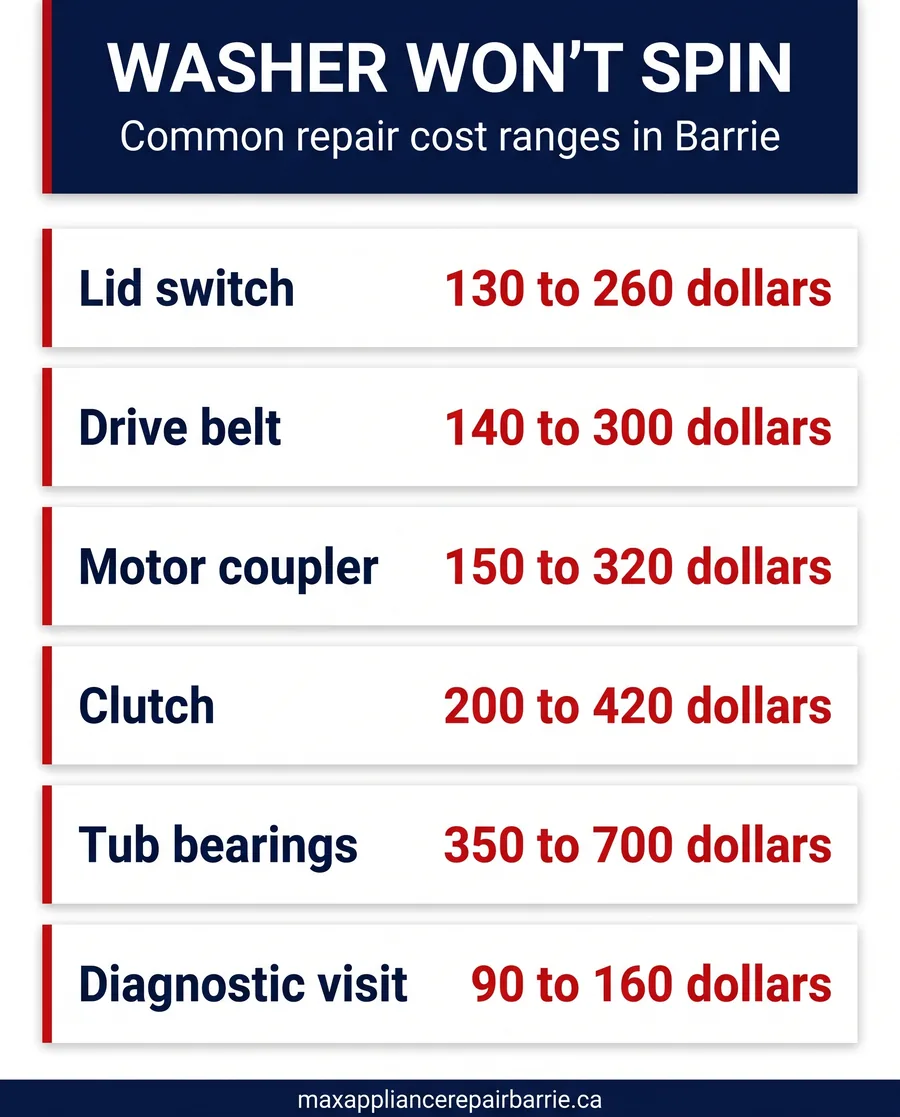
Cost is usually the deciding factor between fixing and replacing. Here is what the common spin-related repairs tend to run in the Barrie area, parts and labour combined. Real quotes vary with your brand, the part supply, and how accessible the machine is.
| Repair | Typical cost range | Notes |
|---|---|---|
| Lid switch | 130 to 260 dollars | Quick part swap, common on top-loaders |
| Drive belt | 140 to 300 dollars | Belt-driven models, motor runs but drum stays still |
| Motor coupler | 150 to 320 dollars | Sacrificial part on many direct-drive washers |
| Clutch | 200 to 420 dollars | Causes slow or weak spin, clothes stay wet |
| Tub bearings | 350 to 700 dollars | Labour-heavy, machine must come apart |
| Diagnostic visit | 90 to 160 dollars | Often credited toward the repair if you proceed |
Pricing disclaimer: The cost ranges above are estimates based on typical Barrie-area rates in 2026. Your actual quote will depend on the make and model, the availability and price of parts, how accessible the machine is, and whether the work is done during regular hours or as an emergency call. These figures are for general planning only. Max Appliance Repair Barrie does not guarantee any specific price. Always get a written quote before authorizing any repair.
Save your money
A good rule of thumb: if the repair costs less than half the price of a comparable new washer and the machine is under about eight years old, fixing it usually makes sense. A $250 coupler or belt on a five-year-old washer is money well spent. A $700 bearing job on a twelve-year-old machine is where replacement starts to win.
Download the free quick guide
Keep the safe checks and cost ranges handy. Save the one-page guide as a PDF for the next time your washer acts up.
When to try it yourself and when to call a pro
Some of this you can handle at the kitchen sink level. Rebalancing a load, clearing a pump filter, or straightening a kinked drain hose are all fair game for a confident homeowner. If one of those solves it, you are done, and it cost you nothing.
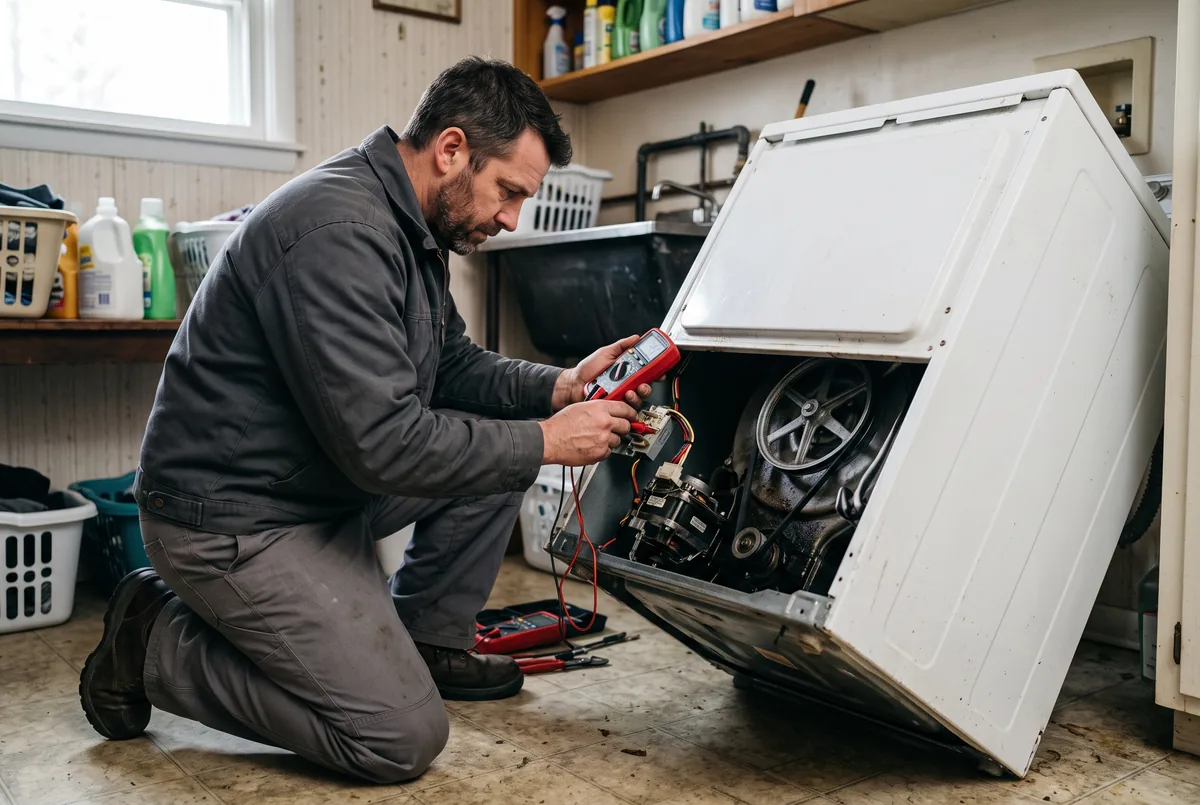
The line gets drawn once you have to open the cabinet. Replacing a belt, coupler, clutch, or bearings means taking the machine apart, working around the motor and wiring, and reassembling it so it is safe and watertight. A wrong reassembly can leak, short out, or damage the drum. That is technician territory, and it is where our team across Innisfil and the wider region spends most of its time.
There is also a repair-or-replace question that a good technician will answer honestly. If your washer is well past a decade old and needs an expensive part, we will tell you when a new machine is the smarter spend. Our guide on how to decide when an appliance breaks lays out the math.
Max Appliance Repair Barrie fixes washers that won’t spin across Innisfil, Orillia, Alliston, and the rest of Simcoe County, with same-day service most days. If the quick checks in this guide didn’t bring your spin cycle back, book a visit through our contact page or call (705) 481-1565 and we will diagnose it properly.
Frequently asked questions
The bottom line: a washer that won’t spin is usually a small, fixable fault, not a dead machine. Rule out the load and the lid, confirm it is draining, and if the drum still won’t turn, let a technician find the belt, coupler, or clutch behind it. When you are ready, Max Appliance Repair Barrie is a call away at (705) 481-1565.