

A Homeowner’s Checklist for a Refrigerator That Is Not Cooling
Last updated: August 11, 2026
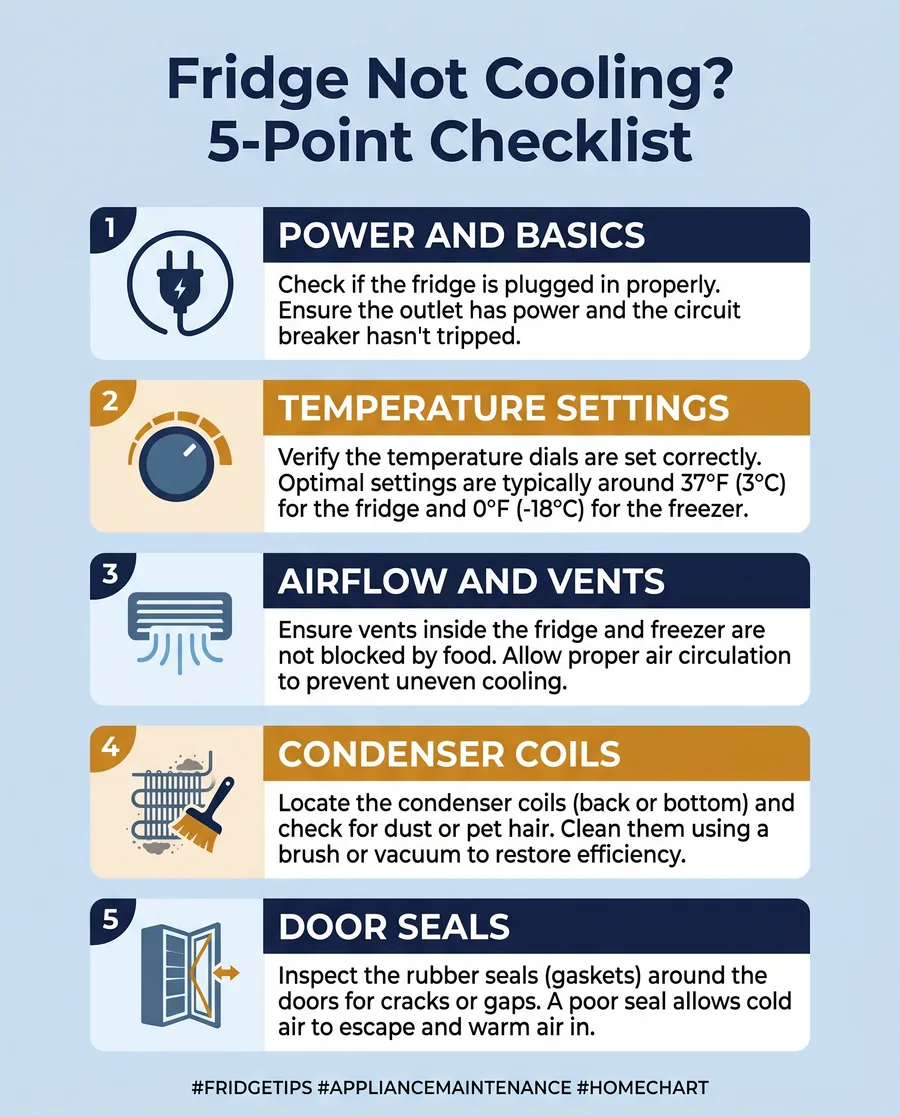
If your refrigerator is not cooling, run through five quick checks before you panic: power, temperature settings, airflow, the condenser coils, and the door seals. More often than you would think, the fix is something simple like a bumped dial, a coil caked in dust, or vents blocked by a stack of leftovers. Work the list from easiest to hardest and you will either solve it yourself or know exactly what to tell the technician. If the fridge still will not cool, we handle refrigerator repair across Barrie and Simcoe County and can usually diagnose it the same week.
Here is the catch with a warm fridge: every hour it stays warm, your food gets closer to the danger zone. So this is one appliance problem worth tackling methodically and quickly. Lets walk the checklist together.
Safety first: The tips here are for general guidance only. Max Appliance Repair Barrie is not responsible for any damage, injury, or cost resulting from action taken based on this content. If you smell burning or see smoke, unplug the appliance at the wall (or switch off its breaker) and stop using it. Never bypass a safety device. Anything involving gas lines must be handled by a TSSA-licensed technician, and major electrical work by a qualified professional. When in doubt, stop and call a pro.
Check 1: power and the basics
It sounds obvious, but start here because it is free and it catches more cases than people expect. Make sure the fridge is actually getting power. Is the interior light on when you open the door? If not, check the plug, the outlet, and the breaker panel for a tripped breaker. A fridge plugged into an outlet controlled by a wall switch, or sharing a circuit with something that tripped, is a classic “dead fridge” that is not broken at all.
Did you know: a fridge can run and still not cool
You might hear the fridge humming and assume the power is fine and the problem is serious. Not always. The evaporator fan and the compressor are different systems. A fridge can run, light up, and even feel like it is working while a failed fan or a defrost problem quietly lets the temperature climb. So do not skip the rest of the checklist just because the fridge is making noise.
Check 2: temperature settings
Next, check the temperature controls inside both compartments. Dials and digital settings get bumped all the time, by a tall bottle, a curious kid, or a deep clean that nudged the knob. The fridge should sit around 4 degrees Celsius (37 Fahrenheit) and the freezer around minus 18 Celsius (0 Fahrenheit). If someone turned the dial toward “warmer” or knocked it to off, this is your whole problem.
Pro tip: give it 24 hours after any change
If you adjust the temperature, do not judge the result in ten minutes. A fridge can take up to 24 hours to fully stabilize at a new setting, especially if it is packed. Put a glass of water with a thermometer in it on the middle shelf and check it the next day. That gives you a real reading instead of the brief warm air you feel right after opening the door, and it tells a technician far more than “it feels warm.”

Check 3: airflow inside the fridge
Cold air has to move. Most modern fridges cool the freezer first, then push chilled air up into the fresh-food compartment through vents. If those vents are blocked by a tall box of cereal, a packed shelf, or a wall of takeout containers, the fridge section warms up even though the freezer is fine. Pull items away from the back wall and the vents and give the air a path.
- Do not overpack. An overstuffed fridge blocks airflow; a nearly empty one struggles to hold cold. Aim for comfortably full, with gaps around the vents.
- Find the vents. They are usually at the back of the fresh-food section, near the top. Keep them clear.
- Listen for the fan. If you never hear the evaporator fan, or you hear it buzzing or rattling, a failed fan motor or an ice-clogged fan can stop cold air from reaching the fridge.
People often ask: my freezer is cold but my fridge is warm. Why?
This is one of the most common patterns we see, and it usually points to airflow or a defrost problem, not a dead compressor. If the freezer makes cold but that cold never reaches the fridge, suspect a failed evaporator fan, a blocked vent, or a buildup of frost on the evaporator coil behind the freezer wall from a defrost-system fault. The good news is that a fridge cold-and-fridge-warm split is often a more affordable repair than a full sealed-system failure. A technician can confirm which it is quickly.
Check 4: the condenser coils
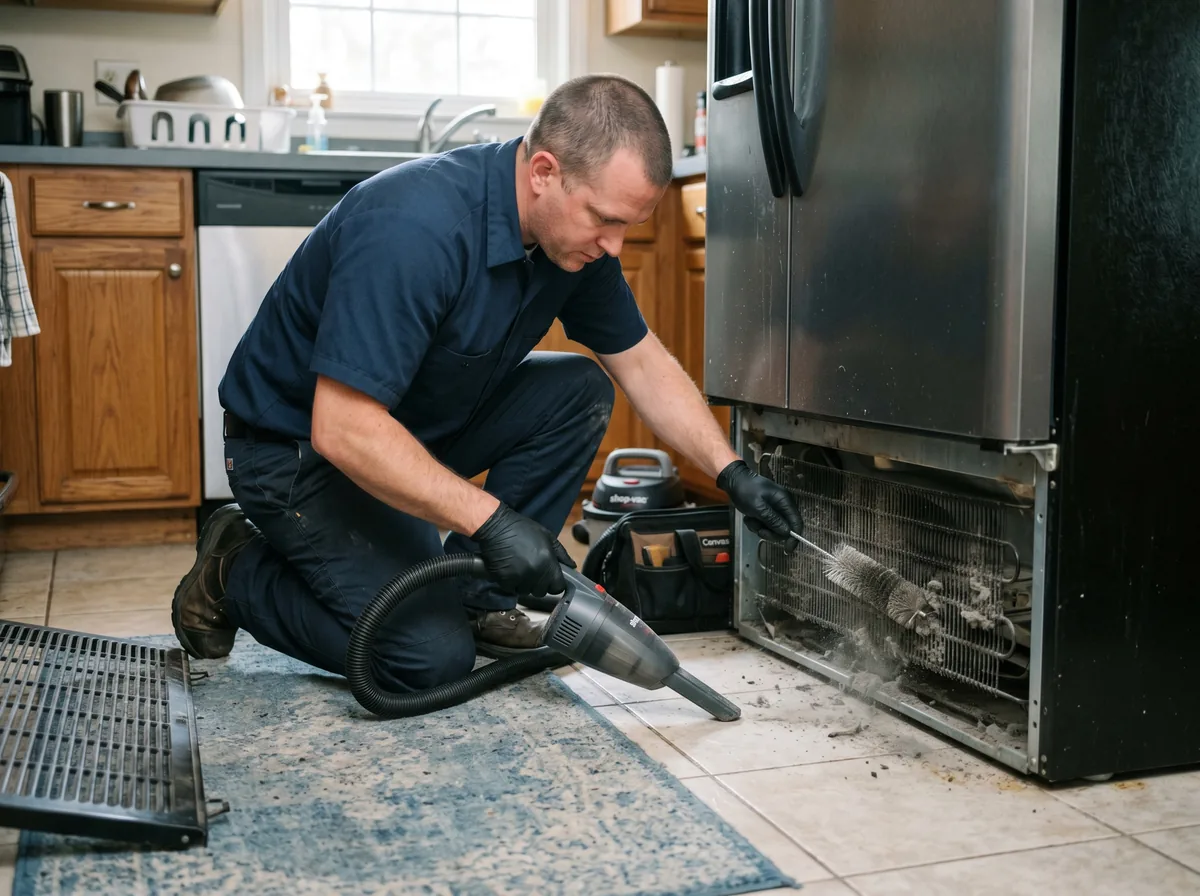
Behind or underneath the fridge are the condenser coils, the part that releases the heat your fridge pulls out of the food. When those coils are coated in dust, pet hair, and kitchen grease, they cannot shed heat well, so the fridge runs longer and cools worse. In a busy Barrie kitchen with pets, coils can clog within a year or two. Cleaning them is one of the few maintenance jobs that genuinely improves cooling.
- Unplug the fridge before you clean the coils.
- Find the coils behind the lower rear panel or behind the toe-grille at the bottom front.
- Vacuum the dust and use a coil brush to reach between the fins.
- Make sure there is a few centimetres of clearance behind the fridge so it can breathe, then plug it back in.
Check 5: door seals and gaskets
Finally, look at the rubber gasket around each door. If it is cracked, loose, or grimy, warm room air leaks in and the fridge can never quite keep up. Try the dollar-bill test: close the door on a bill and pull it out. If it slides out with almost no resistance, the seal is weak in that spot. Cleaning the gasket with warm soapy water fixes a surprising number of cases; a hardened or torn gasket needs replacing.
If you have worked through all five checks and the fridge still will not hold temperature, the problem is likely in the sealed system or an electrical component such as the compressor, start relay, evaporator fan, or defrost control. Those are not DIY repairs, and the sealed system in particular involves refrigerant that only a qualified technician should handle. That is where our fridge repair team in Barrie takes over.
What a cooling repair typically costs
Pricing note: The figures on this page reflect typical market rates in Barrie and Simcoe County as of 2026. What you actually pay depends on the make and age of the appliance, the parts involved, and how easy it is to access. Always get a written quote or an in-person diagnosis before approving a repair.
If the fix is beyond the checklist, here are typical 2026 ranges for Barrie and Simcoe County so you can sanity-check a quote and weigh repair against replacement.
| Likely cause | Typical repair range (2026) | Notes |
|---|---|---|
| Door gasket replacement | $150 to $300 | Simple, often worth doing |
| Evaporator fan motor | $200 to $400 | Common cause of warm-fridge, cold-freezer |
| Defrost system (heater, thermostat, board) | $220 to $450 | Frost buildup blocking airflow |
| Start relay or thermostat | $180 to $350 | Compressor will not start or cycle |
| Sealed system / compressor | $500 to $1,200+ | Refrigerant work; weigh against replacing the fridge |
What to do about your food right now
While you troubleshoot, protect what is in the fridge. Health Canada guidance is that perishable food left above 4 degrees Celsius for more than two hours should be treated as unsafe. So if the fridge has been warm for a while, act now.
- Keep the doors closed as much as possible to hold whatever cold is left.
- Move the most perishable items (meat, dairy, leftovers) into a cooler with ice if the fridge is clearly warm.
- A full freezer can hold safe temperatures for about 48 hours if you keep the door shut; a half-full one about 24 hours.
- When in doubt, throw it out. No leftover is worth a foodborne illness.
When it is time to call a technician
Call a pro once the simple checks are done and the fridge still will not cool, or right away if you spot any of these signs that point to a deeper fault.
- The freezer is cold but the fridge stays warm after you have cleared the vents.
- You hear the compressor clicking on and off rapidly, or it never seems to start.
- Frost is building up on the back wall of the freezer or around the vents.
- The coils are clean, the seals are good, the settings are right, and it still will not cool.
- You smell anything hot or electrical, which is a stop-and-unplug situation.
A fridge that will not cool is on a clock because of your food, so it is worth getting a diagnosis sooner rather than later. If the freezer side is the real trouble, our freezer repair service in Barrie covers chest and upright units too.
Sources and further reading
- Max Appliance Repair Barrie, in-house diagnostic notes and 2026 Simcoe County service pricing observations.
- Health Canada, food safety guidance on the two-hour rule and safe refrigerator and freezer temperatures.
- AppliancePartsPros, “Fridge Running but Not Cooling: What It Really Means” (video, embedded above).
Frequently asked questions
Why is my refrigerator running but not cooling?
A fridge can hum and light up while still failing to cool, because the compressor, the evaporator fan, and the defrost system are separate. If it is running but warm, work the checklist: confirm the temperature settings, clear blocked vents, listen for the evaporator fan, and clean the condenser coils. The most common culprits are a failed evaporator fan, frost buildup from a defrost fault, or dirty coils that stop the fridge shedding heat. If those check out, the issue is likely the sealed system or an electrical part, which needs a technician to diagnose safely.
My freezer is cold but my fridge is warm. What does that mean?
This usually points to an airflow or defrost problem rather than a dead compressor, which is actually good news. Most fridges cool the freezer first, then move that cold air into the fresh-food section. If the cold never reaches the fridge, suspect a failed evaporator fan, a blocked vent, or frost on the evaporator coil from a defrost-system fault. Start by clearing items away from the vents and listening for the fan. If the fridge stays warm after that, a technician can confirm whether it is the fan, the defrost heater, or the control board.
How long can food stay safe in a fridge that stops cooling?
Follow the two-hour rule. Health Canada advises that perishable food held above 4 degrees Celsius for more than two hours should be considered unsafe. Keep the doors shut to hold whatever cold remains, and move meat, dairy, and leftovers into a cooler with ice if the fridge is clearly warm. A full freezer can keep food safe for roughly 48 hours with the door closed, and a half-full one about 24 hours. When you are unsure whether something stayed cold enough, throw it out rather than risk illness.
Can dirty condenser coils stop a fridge from cooling?
Yes, and it is one of the most overlooked causes. The condenser coils release the heat the fridge removes from your food. When they are caked in dust, pet hair, and grease, they cannot shed that heat efficiently, so the fridge runs longer and cools worse, and the compressor can overheat. In a busy kitchen with pets, coils can clog within a year or two. Unplug the fridge, vacuum and brush the coils behind the lower rear panel or front toe-grille, and leave clearance for airflow. It is one of the few DIY steps that genuinely improves cooling.
Is it worth repairing a fridge that is not cooling, or should I replace it?
It depends on the cause and the age of the fridge. Affordable fixes like a door gasket, evaporator fan, or defrost part, often in the $150 to $450 range in 2026, are usually worth doing on a fridge under ten years old. A sealed-system or compressor repair can run $500 to over $1,200, which is closer to the cost of a new unit, so on an older fridge replacement may make more sense. A technician can tell you the true cause and give you an honest repair-or-replace recommendation before you spend anything.
Quick recap
- Power and basics first. Light on? Breaker fine? A fridge can run and still not cool.
- Settings. Aim for 4 C in the fridge, minus 18 C in the freezer; give it 24 hours after a change.
- Airflow. Clear the vents and listen for the evaporator fan.
- Coils. Unplug and clean the condenser coils; clogged coils kill cooling.
- Seals. Do the dollar-bill test; clean or replace a weak gasket.
- Still warm? Protect your food and call a technician for the sealed system or electrical parts.
Download the free quick guide
Print our five-point checklist and stick it inside a cupboard so it is there the next time the fridge acts up.
Fridge still not cooling in Barrie or Simcoe County?
Do not let a warm fridge cost you a fridge full of groceries. We service Barrie, Innisfil, Orillia, Oro-Medonte, Bradford, Wasaga Beach, Collingwood, and Alliston, and we stock common cooling parts. Book a refrigerator diagnosis or meet the team. We will find out why it is warm and give you a straight repair-or-replace answer.